

New tax credits at a glance
If you are planning an HVAC upgrade in 2026, the Inflation Reduction Act provides tax credits that cut thousands off the total cost. These aren't just minor rebates; they are direct incentives to help you install high-efficiency systems without the usual price shock.
The core of the program offers tax credits for investments in energy-efficient home improvements, and HVAC systems are a major component. Specifically, credits are available for heat pumps, air conditioners, and furnaces that meet certain efficiency standards. The maximum credit available is $2,000, but the actual amount depends on the specific system installed. This isn't a rebate you receive upfront; it’s a credit applied when you file your federal income taxes.
The program has strict rules about installation quality. To get the full credit, you have to prove the system was installed correctly, not just that you bought an expensive unit. The IRS uses these rules to ensure the equipment actually hits its rated efficiency in the real world.
Over the next few sections, we’ll break down exactly which systems qualify, how installation impacts your eligibility, the specific tax credit amounts, and how to find a qualified HVAC contractor. We’ll also discuss the long-term benefits of these upgrades, going beyond just the initial tax savings. Investing in heating and cooling services now could pay off for years to come.
Which systems qualify for the credit?
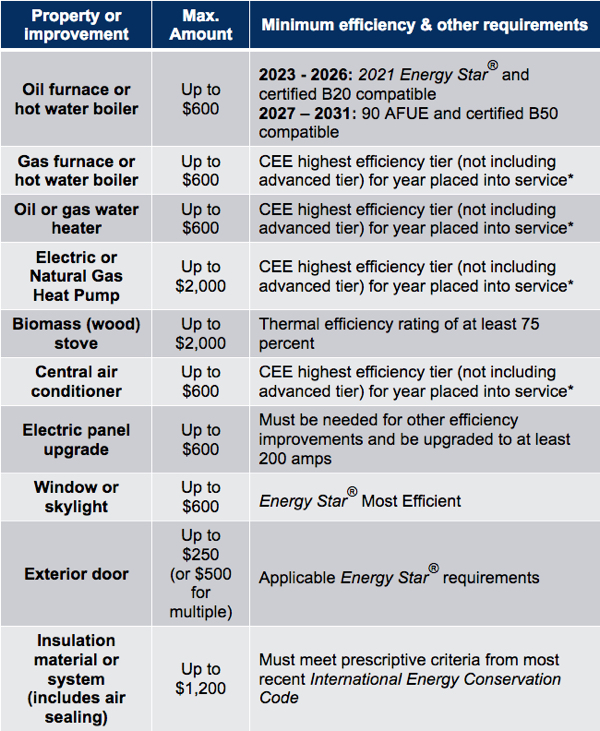
The 2026 tax credits aren’t universally available to all HVAC systems. There are specific efficiency requirements that must be met. For central air conditioners, the system must have a Seasonal Energy Efficiency Ratio (SEER) of at least 16 or higher. For those unfamiliar, SEER measures the cooling output during a typical cooling season divided by the total electric energy input during the same period. A higher SEER rating means greater efficiency.
Heat pumps, which are becoming increasingly popular for both heating and cooling, have two key efficiency ratings to consider: SEER for cooling and Heating Season Performance Factor (HSPF) for heating. To qualify, heat pumps must have a SEER of 16 or higher and an HSPF of 8.8 or higher. HSPF indicates how efficiently a heat pump converts electricity into heat. The higher the HSPF, the more efficient the heat pump.
Furnaces and boilers also have efficiency standards. Oil furnaces must have an Annual Fuel Utilization Efficiency (AFUE) of at least 85%, while gas furnaces must have an AFUE of at least 90%. AFUE measures the percentage of fuel that is converted into usable heat – a higher AFUE means less energy is wasted. These standards are in place to ensure that the systems being incentivized are genuinely more energy-efficient than older models.
There’s a distinction between replacing an existing system and installing a new system where none existed before. The credit for a replacement is up to $2,000, while the credit for a new installation is capped at $2,000. However, the maximum credit is also subject to overall limitations based on total project costs. It's important to note that the equipment must be newly purchased; used equipment doesn't qualify for the tax credit.
Keep in mind that these are the minimum requirements. Many systems exceed these standards, offering even greater energy savings. When considering an upgrade, it’s worth exploring options that go above and beyond the minimums to maximize your long-term benefits. A qualified HVAC installation technician can guide you through the available options and help you choose the best system for your needs.
- Central air conditioners with a SEER of 16 or higher
- Heat Pumps: SEER of 16 or higher, HSPF of 8.8 or higher
- Oil Furnaces: AFUE of at least 85%
- Gas Furnaces: AFUE of at least 90%
HVAC System Efficiency Requirements for Potential Tax Credits (as of late 2023/early 2024)
| System Type | Minimum Efficiency Standard | Potential Tax Credit Considerations |
|---|---|---|
| Air Conditioner (Central) | Meets or exceeds current ENERGY STAR criteria | Tax credits may be available for systems that achieve significant efficiency improvements beyond minimum standards. Specific credit amounts will depend on final legislation. |
| Air Conditioner (Window Unit) | Meets or exceeds current ENERGY STAR criteria | Tax credits may be available for systems that achieve significant efficiency improvements beyond minimum standards. Specific credit amounts will depend on final legislation. |
| Heat Pump (Heating & Cooling) | Meets or exceeds current ENERGY STAR criteria | Heat pumps are often prioritized in energy efficiency incentives due to their higher efficiency. Tax credits may be more substantial for heat pumps compared to traditional AC units. |
| Furnace (Gas) | Annual Fuel Utilization Efficiency (AFUE) of 95% or higher | High-efficiency furnaces are eligible for tax credits. The exact amount will be determined by updated legislation. |
| Furnace (Oil) | Annual Fuel Utilization Efficiency (AFUE) of 95% or higher | High-efficiency oil furnaces are eligible for tax credits. The exact amount will be determined by updated legislation. |
| Boiler (Oil) | Annual Fuel Utilization Efficiency (AFUE) of 95% or higher | High-efficiency oil boilers are eligible for tax credits. The exact amount will be determined by updated legislation. |
| Heat Pump Water Heater | Meets ENERGY STAR criteria | Heat pump water heaters are often eligible for substantial rebates and tax credits due to their significant energy savings. |
Illustrative comparison based on the article research brief. Verify current pricing, limits, and product details in the official docs before relying on it.
Installation Requirements & ANSI/ACCA 9 QVIP
Simply purchasing an energy-efficient HVAC system isn’t enough to guarantee you’ll receive the full tax credit. Proper installation is absolutely critical. The IRS requires that installations meet specific quality standards, as defined by the ANSI/ACCA 9 QVIP (HVAC Quality Installation Verification Protocols). This protocol, developed by the Air Conditioning Contractors of America (ACCA), establishes minimum requirements for verifying that residential and light commercial HVAC systems are installed correctly.
The ANSI/ACCA 9 QVIP covers a range of installation aspects, including refrigerant charge, airflow, and system controls. It’s designed to ensure that the system operates at its peak efficiency and delivers the expected energy savings. Without proper installation, even the most efficient equipment will underperform, potentially negating the benefits of the tax credit.
What does this mean for homeowners? It means you need to choose a contractor who understands and adheres to the ANSI/ACCA 9 QVIP standards. Ask your contractor specifically if they are familiar with the protocol and can provide documentation demonstrating compliance. They should be able to perform necessary testing and provide you with a report detailing the installation process and results.
To claim the tax credit, you’ll need to keep detailed records of your HVAC system purchase and installation. This includes the purchase receipt, the installation report from your contractor (demonstrating compliance with ANSI/ACCA 9 QVIP), and any other relevant documentation. The IRS may request this documentation if you are audited, so it's essential to keep it organized and accessible. Consider digital copies as a backup.
The QVIP protocol is the IRS's way of ensuring the system actually works as advertised. While you don't need to memorize the technical specs, you must ensure your contractor follows them, or you risk losing the credit entirely.
- Choose a contractor familiar with ANSI/ACCA 9 QVIP.
- Obtain a detailed installation report.
- Keep the purchase receipt and installation report.
- Maintain digital backup copies of all documentation.
Tax Credit Amounts: Breakdown by System
The maximum tax credit available is $2,000, but the exact amount you receive will vary depending on the type of system you install and whether it's a replacement or a new installation. It’s also important to remember that the credit is non-refundable, meaning you can’t receive any of it back as a refund if it exceeds your tax liability.
For heat pumps, heat pump water heaters, and biomass stoves, the credit is equal to 30% of the qualified expenses. For other qualified energy-efficient home improvements, including central air conditioners and furnaces that meet the efficiency standards, the credit is also 30% of the qualified expenses. However, there are annual limits on the total amount of credits you can claim.
Let’s look at a couple of examples. If you install a qualified heat pump that costs $8,000, your tax credit would be $2,400 (30% of $8,000). If you replace an older, inefficient furnace with a qualified high-efficiency model that costs $4,000, your tax credit would be $1,200 (30% of $4,000).
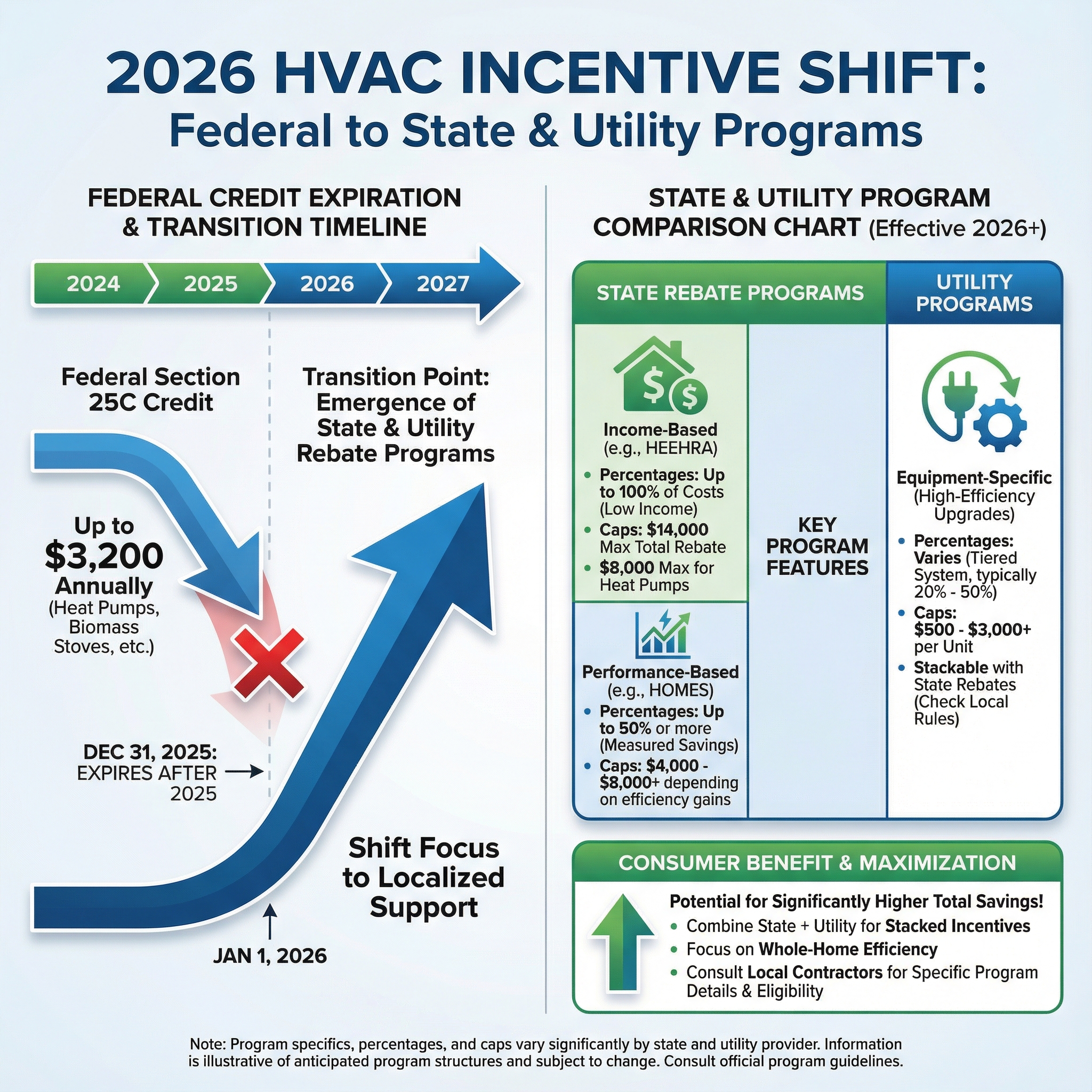
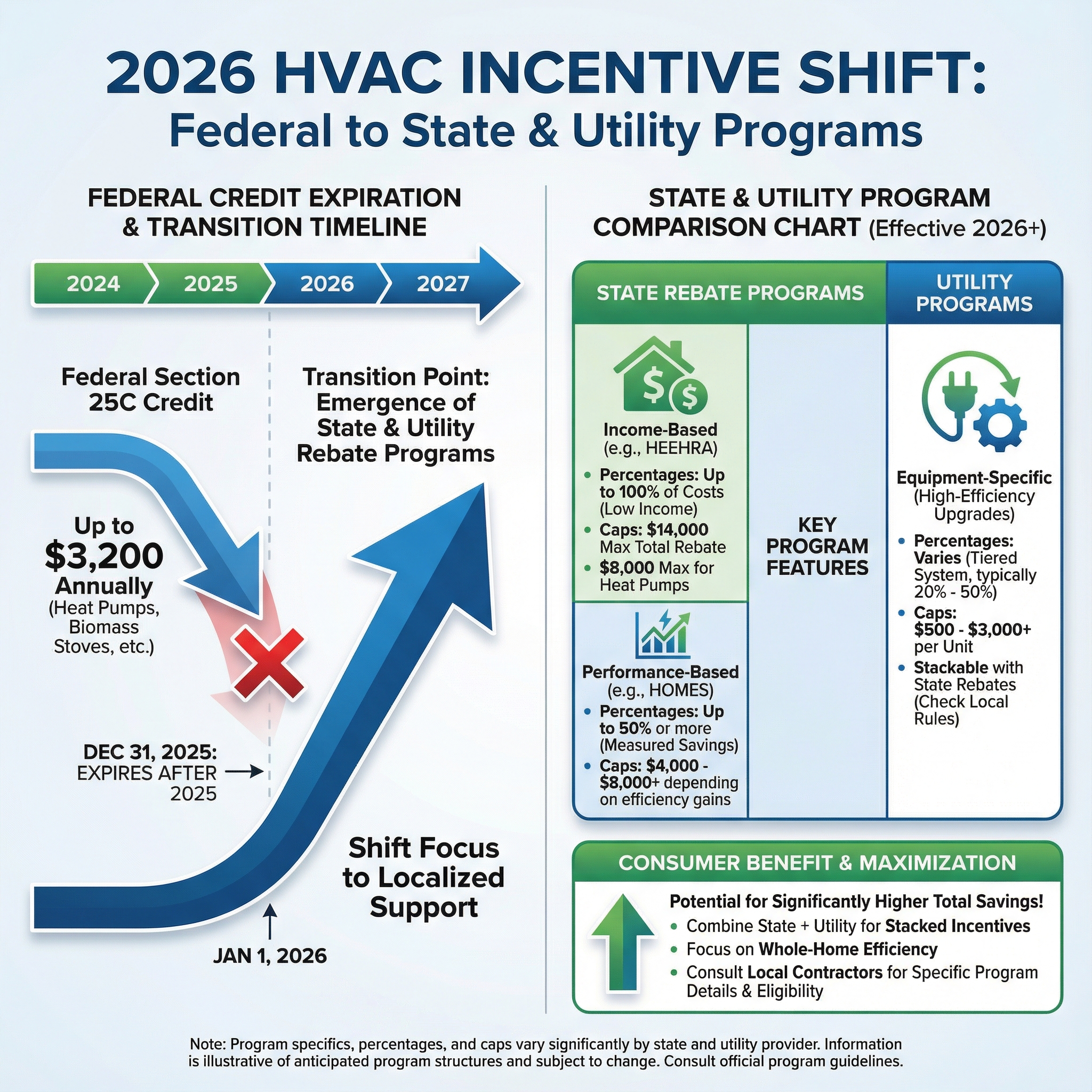
In many cases, these federal tax credits can be stacked with state and local rebates, further reducing your overall cost. Check with your state energy office and local utility companies to see what incentives are available in your area. A good HVAC services provider will likely be aware of local incentives as well.
The IRS provides Form 5695 for claiming these credits. It’s a good idea to review the form and instructions before starting your project to understand the documentation requirements and ensure you’re eligible. You can find Form 5695 and its instructions on the IRS website.
Finding a Qualified Installer
Choosing the right HVAC contractor is crucial, not just for ensuring a proper installation and maximizing your tax credit, but also for the long-term performance and reliability of your system. Look for contractors who are knowledgeable about the 2026 tax credits and can explain the requirements clearly. Don’t be afraid to ask questions!
Certifications like NATE (North American Technician Excellence) and ACCA (Air Conditioning Contractors of America) demonstrate a contractor’s commitment to professional development and quality workmanship. NATE-certified technicians have passed rigorous exams demonstrating their expertise in HVAC installation and repair. ACCA membership indicates that a contractor adheres to industry best practices.
Before hiring a contractor, get quotes from multiple companies. Compare not only the price but also the scope of work, the equipment being offered, and the contractor’s experience. Check online reviews and ask for references from previous customers. A reputable contractor should be happy to provide both.
Verify that the contractor is licensed and insured. Licensing ensures that the contractor meets local regulations and has the necessary qualifications to perform HVAC work. Insurance protects you from liability in case of accidents or damage during the installation process. Don't skimp on this step – it's worth the peace of mind.
- Ask about experience with the 2026 tax credits.
- Look for NATE or ACCA certifications to verify technical skill.
- Get quotes from multiple contractors.
- Check online reviews and references.
- Verify licensing and insurance.
Questions for HVAC Contractors
- Tax Credit Expertise - Do you have experience with installations that qualify for the federal energy efficiency tax credits, specifically those outlined in the Inflation Reduction Act?
- ENERGY STAR Certification - Are the HVAC systems you install ENERGY STAR certified? Many tax credits require ENERGY STAR qualified equipment.
- Efficiency Ratings - Can you provide documentation of the equipment's efficiency ratings (SEER, EER, HSPF, AFUE) to verify eligibility for tax credits?
- Installation Certification - Are your technicians NATE-certified (North American Technician Excellence)? While not always *required*, NATE certification demonstrates a commitment to proper installation techniques.
- Rebate Assistance - Do you assist customers with navigating the rebate application process and required documentation?
- System Right-Sizing - How do you ensure the new HVAC system is properly sized for my home? Correct sizing is crucial for efficiency and potential tax credit qualification.
- Written Documentation - Will you provide a detailed invoice and documentation outlining the equipment installed, its efficiency ratings, and the total project cost?
Savings beyond the initial credit
While the upfront tax credit is a significant benefit, the long-term savings associated with upgrading to an energy-efficient HVAC system are equally important. Modern, high-efficiency systems consume significantly less energy, leading to lower monthly utility bills. Over the lifespan of the system, these savings can add up to a substantial amount.
Improved home comfort is another key benefit. Newer systems often offer more precise temperature control, better humidity management, and quieter operation. This can create a more comfortable and enjoyable living environment for you and your family.
From an environmental perspective, energy-efficient HVAC systems reduce your carbon footprint. By consuming less energy, you’re contributing to a more sustainable future. This is a benefit that extends beyond your own home and contributes to a healthier planet.
When evaluating the total cost of ownership, consider not only the initial purchase price and installation cost but also the ongoing energy costs, maintenance costs, and potential repair costs. A high-quality, energy-efficient system may have a higher upfront cost, but it can save you money in the long run. A professional HVAC Installation company can help you assess these factors.
Common Mistakes & How to Avoid Them
Homeowners sometimes make mistakes when applying for these tax credits, unintentionally reducing their potential savings. One common error is failing to keep proper documentation. As mentioned earlier, you need to retain the purchase receipt, the installation report, and any other relevant paperwork. Without this documentation, your claim could be denied.
Choosing an unqualified installer is another frequent mistake. An improper installation can render your system inefficient and invalidate your tax credit. Always verify the contractor’s credentials and experience. Another issue is missing the deadline for filing your taxes. Make sure you’re aware of the filing deadlines and submit your claim on time.
Failing to understand the eligibility requirements can also lead to problems. Ensure that the system you purchase meets the SEER, EER, and HSPF standards outlined by the IRS. Don’t assume that all systems qualify – do your research beforehand. Some homeowners also mistakenly believe that any energy-efficient upgrade qualifies, without realizing the specific requirements.
Finally, neglecting to check for state and local rebates is a missed opportunity. These rebates can be stacked with the federal tax credit, providing even greater savings. Take the time to research available incentives in your area. Being proactive and avoiding these common pitfalls will significantly increase your chances of successfully claiming the full tax credit.
No comments yet. Be the first to share your thoughts!