
Why choose an HVAC apprenticeship
You are likely looking at this path because the traditional corporate ladder feels too slow or too expensive. You want to work with your hands, solve immediate problems, and see a paycheck at the end of the week. An HVAC apprenticeship is the direct route to that reality. It trades the heavy debt of trade school for on-the-job training that pays you from day one.
The financial math is clear. While trade school tuition can leave graduates with significant loans, apprentices earn a wage that grows as their skills improve. According to industry data, median annual wages for HVAC technicians hover between $50,000 and $60,000, with apprentices earning a percentage of that as they progress. You are not just learning; you are earning your degree in the field.
Industry demand is not a trend; it is a baseline requirement. Every building, from hospitals to homes, needs climate control. This creates immediate job security that many white-collar roles cannot match. The Bureau of Labor Statistics confirms steady growth for heating, air conditioning, and refrigeration mechanics, ensuring that your skills will always be in demand.
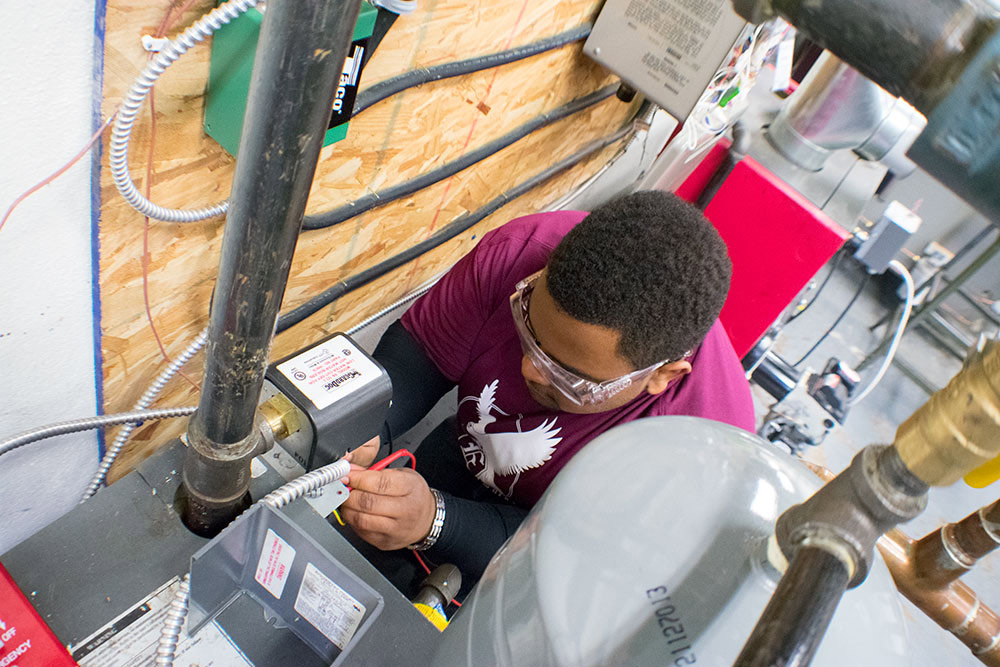
The trade also removes the artificial age barrier found in many entry-level corporate jobs. There is no upper age limit for apprenticeships. Whether you are 18 or 50, the industry values competence and reliability over pedigree. You bring your life experience to the tools, and the trade school brings the technical certification. It is a practical, financially viable way to gain new qualifications without starting from zero.
Check eligibility and prerequisites
The first step toward an HVAC Apprenticeship is clearing the baseline hurdles. Most programs have strict entry requirements that act as a filter before you even reach the interview stage. If you miss these, your application disappears into the pile, regardless of your passion for the trade.
Meet the basic requirements
You need a high school diploma or GED. This is non-negotiable. Beyond the diploma, programs look for strong math skills, specifically algebra and geometry, because you will be calculating loads, airflow, and electrical resistance daily. You also need a valid driver’s license and reliable transportation. HVAC work is field-based; you are expected to get to job sites on time, every time.
Address physical demands and age limits
The work is physically demanding. You will be lifting heavy units, working in tight crawl spaces, and standing for long shifts. Basic physical fitness is required.
Age is rarely a barrier. While some traditional trades have skewed older, many HVAC programs welcome younger candidates straight out of high school. Conversely, if you are 32 or older, you are not too old to start. Many programs actively seek career changers who bring maturity and reliability to the job site.
Prepare your documents
Before you apply, gather your paperwork. Most sponsors require proof of your education, a resume, and sometimes a pre-employment physical or drug screen. Having these ready shows you are serious and organized.

Locate your high school diploma or GED certificate. If you have taken any technical electives in physics or math, highlight those on your resume. These are your primary credentials for entry.
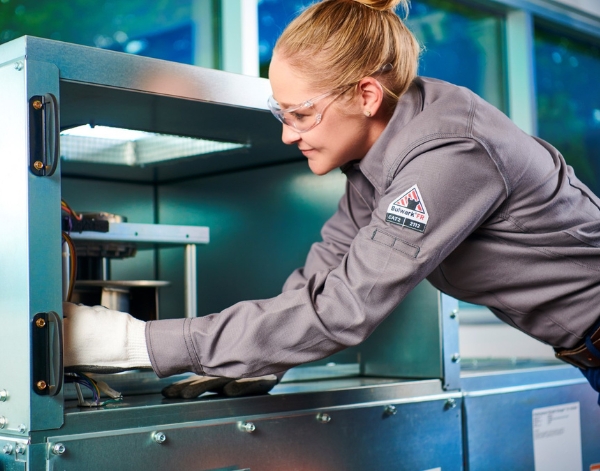
Ensure you can lift at least 50 pounds and work in confined spaces. Some sponsors require a medical exam before you start. Check the specific health requirements of the union or company you are applying to.
You must have a way to get to work. Many apprenticeships are with companies that send you to different customer sites. A clean driving record is often as important as the vehicle itself.
Find union and non-union programs
Choosing between a union apprenticeship and a contractor-led program is less about ideology and more about how you want to work. Union tracks, like UA Local 322, offer structured classroom hours and standardized pay scales, while non-union programs often prioritize immediate on-the-job immersion. Both paths lead to a qualified HVAC Apprenticeship, but the daily rhythm and long-term benefits differ significantly.
The following table compares the structural differences between these two primary training models. Use this to gauge which environment aligns with your learning style and financial needs.
| Feature | Union (e.g., UA Local 322) | Non-Union Contractor |
|---|---|---|
| Training Structure | Classroom + OJT (e.g., 1,800 hrs/year) | Primarily on-the-job with varying classroom hours |
| Pay Scale | Graduated wage increases per contract | Set by employer, often starting lower |
| Benefits Package | Comprehensive (health, pension, vacation fund) | Varies widely by company size |
| Application Process | Competitive, often seasonal cycles | Rolling applications, faster start |
Union-affiliated apprenticeships
Union apprenticeships are known for their rigorous standards and comprehensive benefits. Programs like UA Local 322 typically require a five-year commitment, dividing training into annual segments. Each year includes a minimum of 1,800 hours of on-the-job training alongside classroom instruction. This structure ensures you master both the theory and the practical application of HVAC systems.
The application process is often competitive and follows strict seasonal cycles. For instance, UA Local 322 opens applications for their 2027 cohort in mid-September, with a narrow window for submission. This timeline requires careful planning, as missing the window can delay your start by a full year. The upside is a clear, contractually guaranteed path to journeyman status with top-tier benefits.
Non-union contractor-led programs
Non-union apprenticeships are frequently run by individual HVAC companies or small-to-mid-sized contractors. These programs often offer a faster start date, with rolling applications that allow you to begin training as soon as a position opens. The training is heavily focused on on-the-job experience, meaning you learn by doing from day one.
While the pay scale may start lower than union equivalents, many non-union employers offer flexibility and direct mentorship from company owners. Companies like Princeton Air provide direct entry points for motivated individuals, often prioritizing attitude and work ethic over formal credentials. This path is ideal if you prefer immediate field exposure and want to build relationships with local business owners.
Complete the training phases
An HVAC apprenticeship is a structured blend of classroom instruction and on-the-job training, typically spanning three to five years. This timeline ensures you build both the theoretical knowledge and the practical skills needed to pass licensing exams and work independently. The program is divided into progressive segments, each increasing in complexity and responsibility.
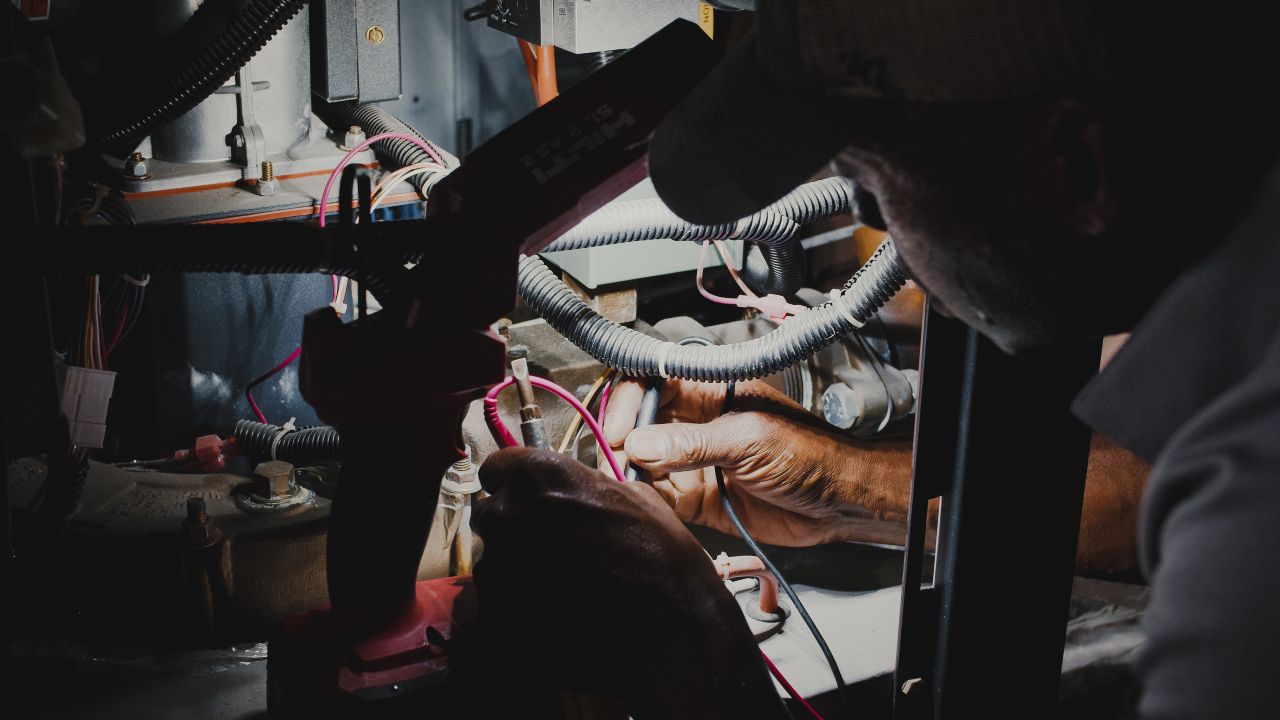
The first year focuses on core safety protocols, basic tools, and foundational theory. You will learn about electrical principles, thermodynamics, and blueprint reading. On the job, you assist journeymen with simple tasks like site preparation and material handling. This phase builds the muscle memory and safety awareness essential for field work.
As you advance, you move to installing components and diagnosing basic system failures. Classroom hours cover refrigerant handling, ductwork design, and electrical wiring codes. Field work becomes more hands-on; you begin wiring thermostats, charging systems with refrigerant, and troubleshooting mechanical issues under supervision.
The final phase prepares you for independent work. You tackle complex electrical diagrams, commercial systems, and advanced diagnostics. Many apprenticeships offer specialization tracks in areas like refrigeration or building automation. You are expected to work with minimal oversight, mentoring newer apprentices and ensuring code compliance on every job.
Throughout this period, you will complete a set number of on-the-job hours—often 2,000 to 6,000 depending on the program—and corresponding classroom hours. This dual approach ensures that your HVAC apprenticeship is not just about learning a trade, but mastering the specific codes and technologies used in modern building systems.
Avoid common application mistakes
Many candidates treat an HVAC Apprenticeship application like a generic job search, missing the specific windows and requirements that union and non-union programs enforce. This leads to rejected files or missed opportunities for the next cycle. The process is less about having the perfect resume and more about strict adherence to eligibility checks and timing.
Miss the application window
Union-sponsored programs often open applications for only a few weeks each year. For example, UA Local 322 opens its 2027 application window from September 14 to September 25, 2026. Missing this narrow window means waiting another full year. Mark these dates on your calendar immediately and set reminders weeks in advance.
Skip the safety certifications
Submitting an application without the required pre-requisites is a common error. Many programs require a valid DOT medical card, a CPR/First Aid certification, or a pre-employment drug screen before they will even review your file. Check the specific program’s website for a "Requirements" or "Eligibility" page to ensure you have these documents ready before you click submit.
Ignore the aptitude test
Many apprenticeship programs require an aptitude test, such as the ACT WorkKeys or a specific math/reading assessment. Candidates often underestimate the preparation needed. Treat this like a final exam: review basic algebra and reading comprehension, and practice with sample tests provided by the union or training center.
Submit incomplete documentation
Applications are often rejected for missing signatures, unreadable copies of identification, or incomplete work history forms. Review your submission checklist twice. If a field does not apply, write "N/A" rather than leaving it blank. Incomplete files are often automatically disqualified before a human ever sees them.

Review the program’s specific eligibility criteria, including age, education, and physical requirements. Ensure you meet all baseline standards before investing time in the application.
Obtain necessary certifications like DOT medical cards, CPR/First Aid, or drug screening results. These are often mandatory before your application can be processed.
Study for required math and reading assessments. Use sample tests provided by the union to gauge your readiness and identify areas for improvement.
Double-check all forms for signatures and legible documents. Submit your application within the strict window to avoid disqualification.
Frequently Asked Questions About HVAC Apprenticeships
Starting an HVAC apprenticeship often comes with a mix of excitement and uncertainty. Before committing to a program, it helps to clarify how the training works, what you can expect to earn, and whether the timeline fits your life. These common questions address the practical details of launching your career as an HVAC apprentice.
Quick checklist
-
Verify eligibilityEnsure you have a high school diploma or GED and meet basic physical requirements before applying.
-
Check application windowsMark union application deadlines (e.g., Sept 14–25) on your calendar to avoid missing the cycle.
-
Gather certificationsObtain DOT medical cards, CPR/First Aid, or drug screening results if required by the sponsor.
-
Prepare for testingReview basic algebra and reading comprehension for aptitude assessments like ACT WorkKeys.
No comments yet. Be the first to share your thoughts!