

Why start an HVAC apprenticeship now
The heating, ventilation, and air conditioning (HVAC) trade offers a stable career path with immediate financial returns. Unlike many entry-level positions that offer low wages and slow progression, an HVAC apprenticeship combines paid on-the-job training with classroom instruction. This model allows you to earn a living while learning a high-demand skill, rather than accumulating debt in a traditional four-year degree program.
The financial incentive is clear. According to the U.S. Bureau of Labor Statistics, the median annual wage for HVAC technicians was $62,690 in May 2023. The top 10 percent earned more than $91,020. These figures reflect the specialized nature of the work and the constant need for skilled labor to maintain residential and commercial systems. With over 241,000 new apprentices registered across the U.S. in recent years, the pipeline for skilled tradespeople is actively growing.
Job security is another major factor. The BLS projects employment for heating, air conditioning, and refrigeration mechanics and installers to grow 6 percent from 2022 to 2032, faster than the average for all occupations. This growth is driven by the need to install energy-efficient systems and replace aging infrastructure. As building codes tighten and climate control becomes more critical, the demand for qualified technicians remains steady regardless of economic fluctuations.
Starting an apprenticeship now positions you for long-term success in a field that is not easily automated. The hands-on nature of HVAC work requires problem-solving skills and physical adaptability that machines cannot replicate. By entering the trade early, you build a foundation of practical experience that will serve you well as you progress toward journeyman status and beyond.
Check your eligibility and prerequisites
Before applying, confirm you meet the baseline requirements for an HVAC apprenticeship. Most programs require candidates to be at least 18 years old and hold a high school diploma or GED. While a four-year college degree is not necessary, a strong foundation in algebra and physics is essential for understanding electrical and mechanical systems.
Physical ability is a non-negotiable prerequisite. The work involves lifting heavy equipment, working in tight crawl spaces, and standing for extended periods. Programs typically require a medical exam to ensure you can safely perform these tasks without risking injury to yourself or others.

Age is rarely a barrier to entry. Apprenticeships are open to career changers and adults of all ages. If you are 32, 42, or 52, you are eligible to apply, provided you meet the educational and physical standards.
Use this checklist to verify your readiness before submitting applications to unions or contractors.
-
Minimum age of 18 years
-
High school diploma or GED
-
Valid driver's license
-
Physical ability to lift 50+ lbs
-
Drug-free background
-
Basic algebra and physics knowledge
Find and apply to apprenticeship programs
Securing an apprenticeship is the most direct path into the trade, but the application process varies significantly depending on whether you pursue a union, non-union, or pre-apprentice route. Each path has distinct requirements, timelines, and application portals. Understanding these differences helps you target the right programs and avoid wasted effort.
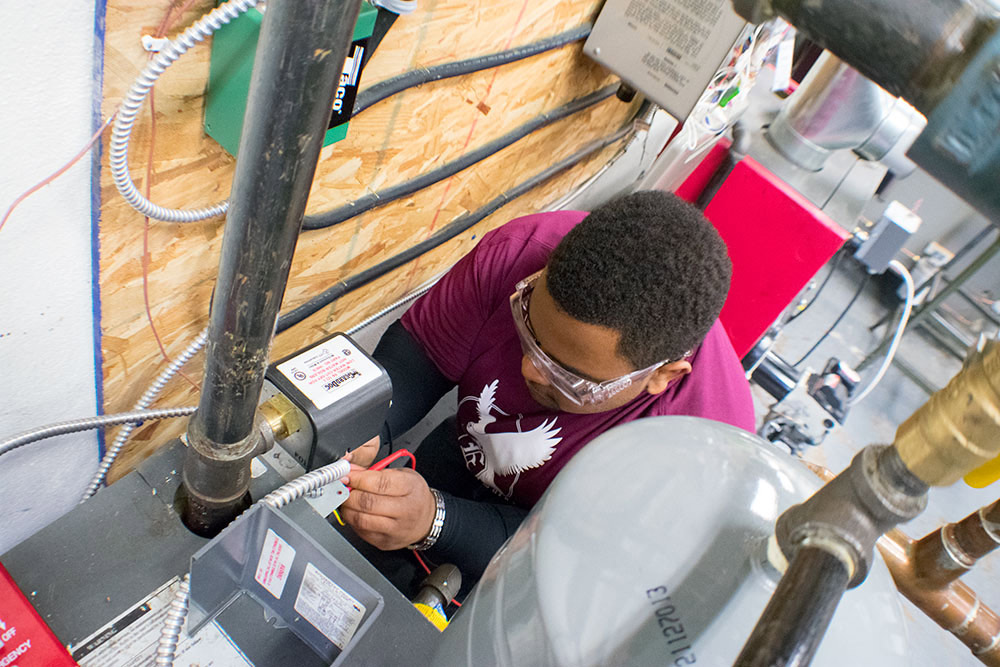
Start with Apprenticeship.gov, the U.S. Department of Labor’s official database for registered apprenticeships. This is the primary source for verified programs that meet federal standards. Supplement this search with industry-specific boards like HVACR Career Now and major job aggregators such as Indeed or ZipRecruiter. When searching, use specific keywords like "HVAC apprentice," "HVAC install apprentice," or "pre-apprentice" to filter out unrelated technician roles. Filter results by your state to ensure you are looking at local opportunities with realistic commute times.
For union apprenticeships, you must apply directly through the local Joint Apprenticeship and Training Committee (JATC). Visit the website of your local UA (United Association) chapter or search for "UA local [number] apprenticeship application." Union programs often have strict application windows, entrance exams, and physical agility tests. For non-union programs, identify large HVAC contractors in your area and check their careers pages. Many companies sponsor their own apprenticeships to build their future workforce. Reach out to local independent contractors as well; some may hire pre-apprentices directly into their teams.
Most applications require a resume, high school diploma or GED transcript, and proof of eligibility to work in the U.S. Union programs often require additional steps, such as taking a pre-employment assessment or an aptitude test covering basic math and reading comprehension. Non-union employers may ask for a cover letter explaining your interest in the trade. Ensure all documents are current and accurately reflect your education and any relevant work history, even if it is not in HVAC. Attention to detail in your application materials signals professionalism to hiring managers.
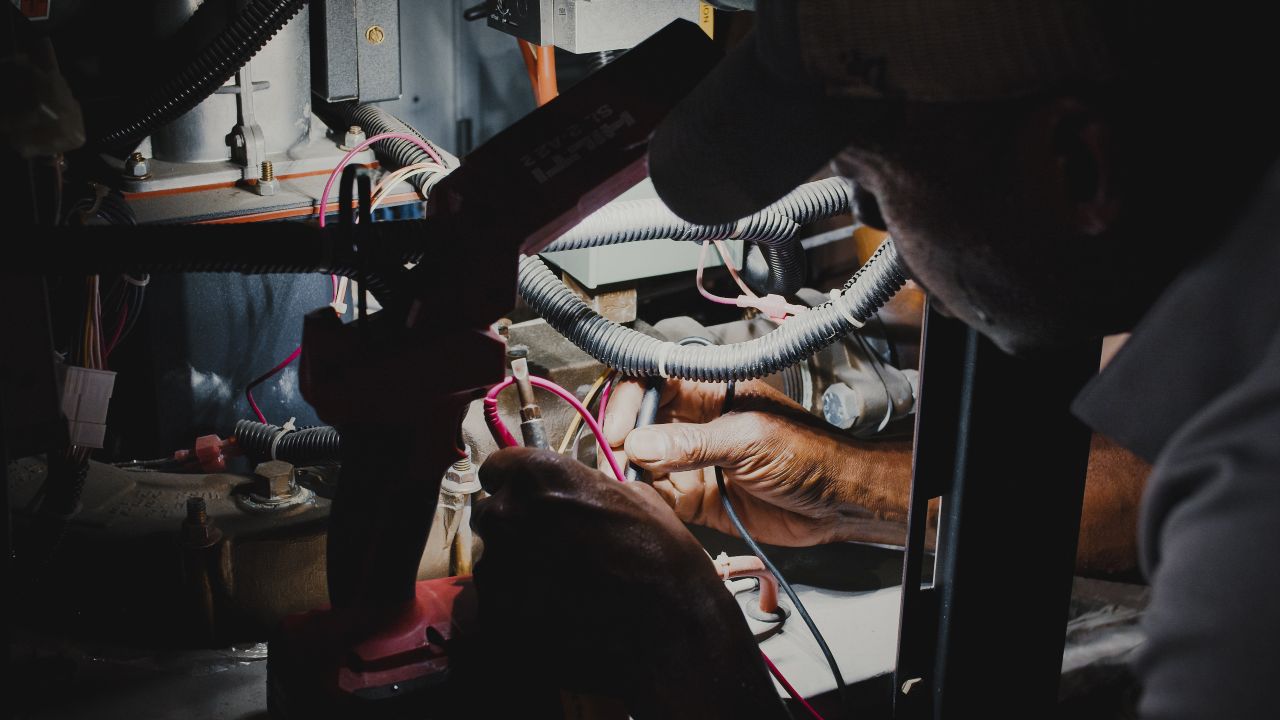
If selected, you will be invited to an interview or orientation. For union programs, this may include a tour of the training facility and a meeting with instructors. Be prepared to discuss your career goals, reliability, and willingness to learn. Non-union interviews are typically more informal but still focus on your work ethic and availability. If offered a position, review the contract carefully. Understand the wage progression, required hours, and any obligations you have regarding tuition or training materials. Sign the agreement and register for your first class or shift as instructed.
What to expect during training
An HVAC apprenticeship is a structured blend of classroom instruction and paid on-the-job training, typically lasting three to five years. You will spend roughly half your time in a classroom learning the theory behind thermodynamics, electrical systems, and code compliance, and the other half working alongside a journeyman or master technician. This dual approach ensures you understand not just how to install or repair equipment, but why specific methods are required for safety and efficiency.
The timeline varies depending on whether the program is union-sponsored or managed by a private employer. Union programs often follow a standardized curriculum with strict hour requirements for both classroom and field work. Private or non-union programs may offer more flexibility but still require you to log a specific number of training hours to qualify for licensure. Regardless of the sponsor, you will be paid a wage that increases incrementally as you complete each stage of the training.
Expect a steep learning curve in the first year. You will start with basic safety protocols, tool handling, and simple maintenance tasks before moving on to complex diagnostics and system installations. Classroom topics often include refrigerant handling, blueprint reading, and local building codes. By the end of the program, you should be prepared to take licensing exams and work independently as a journeyman technician.
Common mistakes to avoid
Starting an HVAC apprenticeship is a significant commitment, but many candidates stumble before they even finish their first year. The most frequent errors are preventable. By recognizing these pitfalls early, you can protect your income and your career trajectory.
Skipping required certifications
Many apprentices assume that classroom instruction covers all regulatory requirements. This is incorrect. The EPA Section 608 certification is not optional; it is a federal mandate for handling refrigerants. Without it, you cannot legally perform core tasks, limiting your value to employers and your earning potential.
You cannot legally work with refrigerants without EPA Section 608 certification. Ensure your program or employer supports you in obtaining this credential before you start field work.
Underestimating physical demands
HVAC work is physically taxing. You will climb ladders, work in attics, crawl in tight crawl spaces, and lift heavy compressors. Many new apprentices quit because they did not prepare for the physical strain. Treat your fitness as part of your job preparation. Proper lifting techniques and stamina are just as important as technical knowledge.
Ignoring the long timeline
An HVAC apprenticeship typically lasts three to five years. Some candidates treat it as a short-term gig and lose motivation when the learning curve flattens. Remember that this is a career, not a quick job. The Bureau of Labor Statistics reports that experienced technicians earn significantly more than entry-level helpers. Stay focused on the long-term goal.
No comments yet. Be the first to share your thoughts!