

2026 tax credit basics
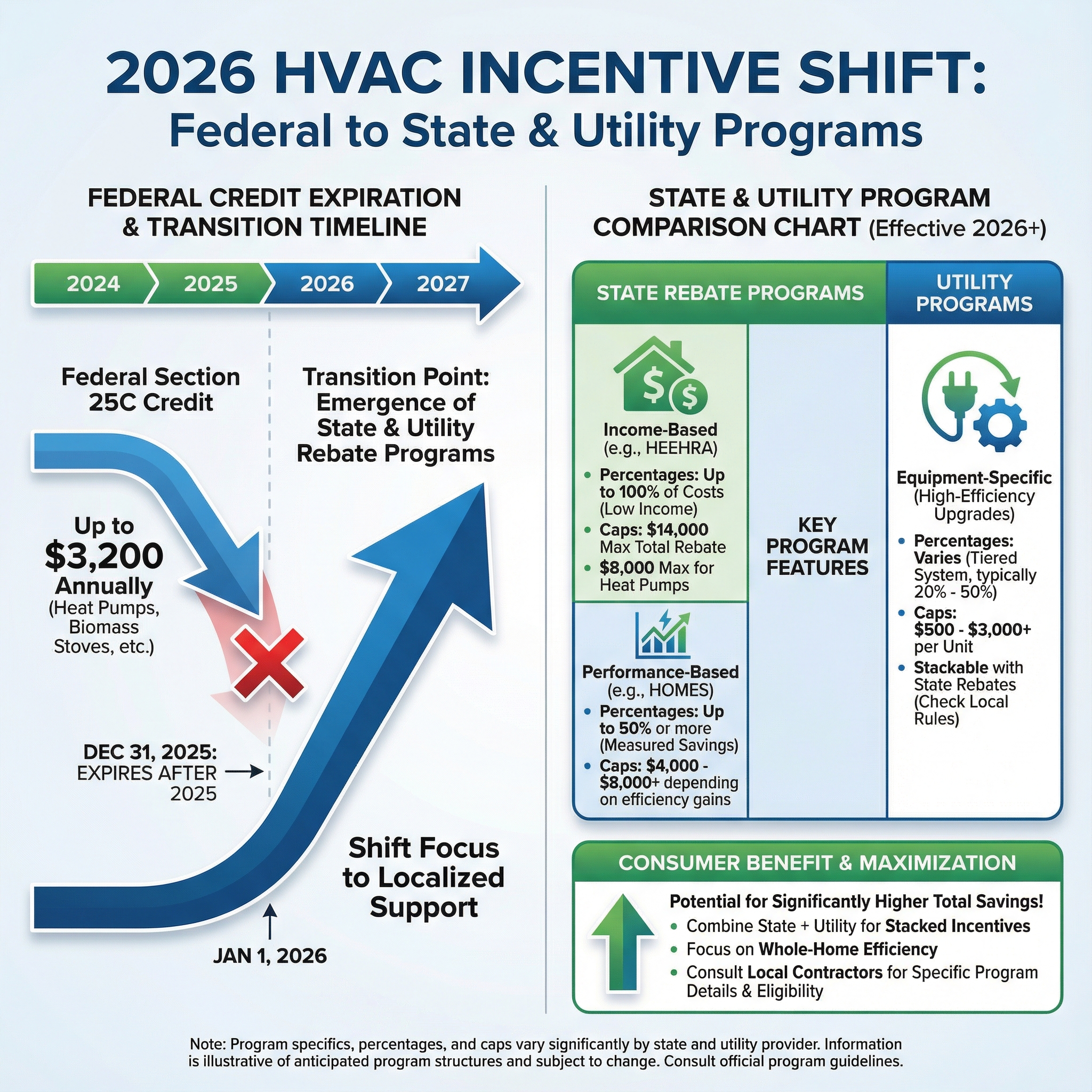
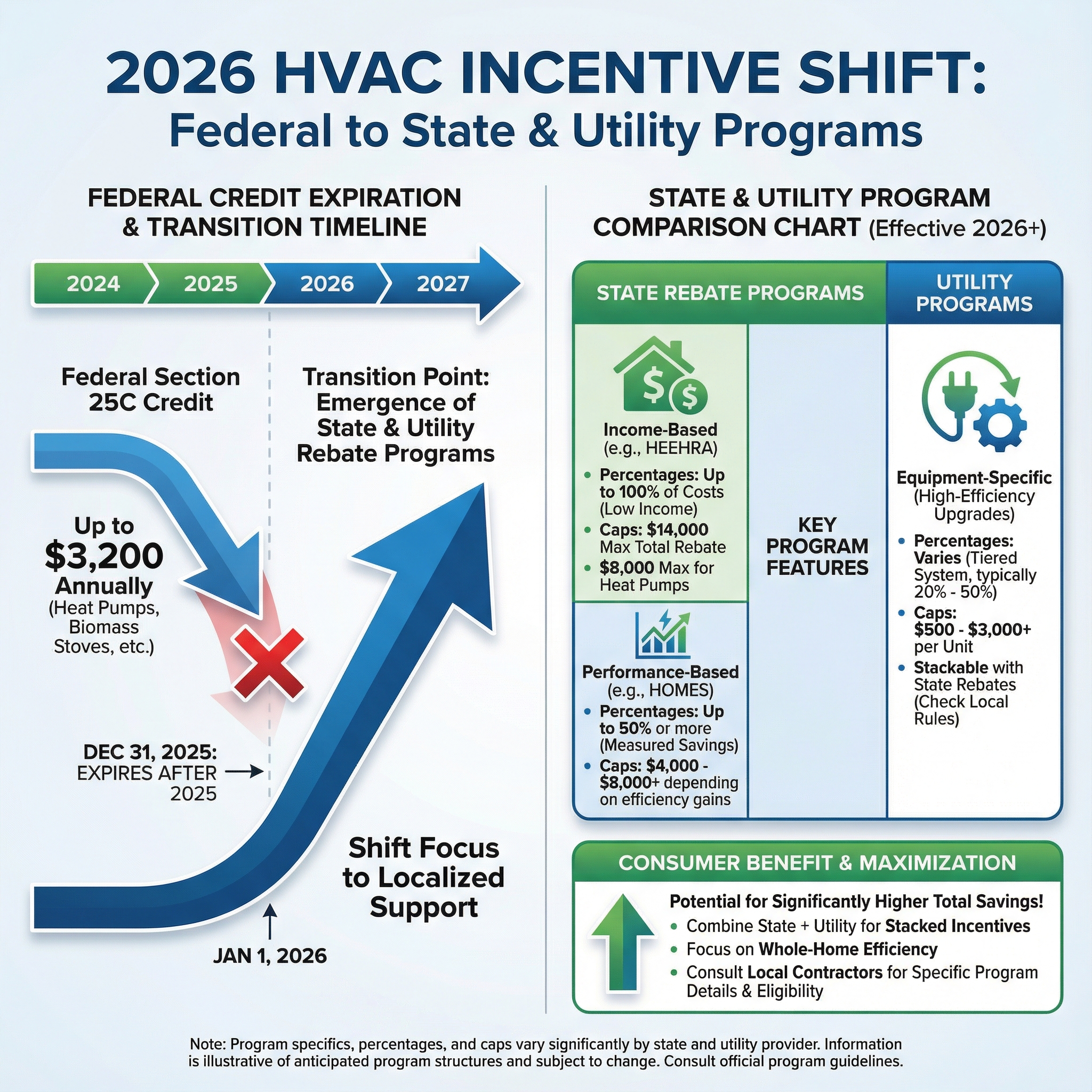
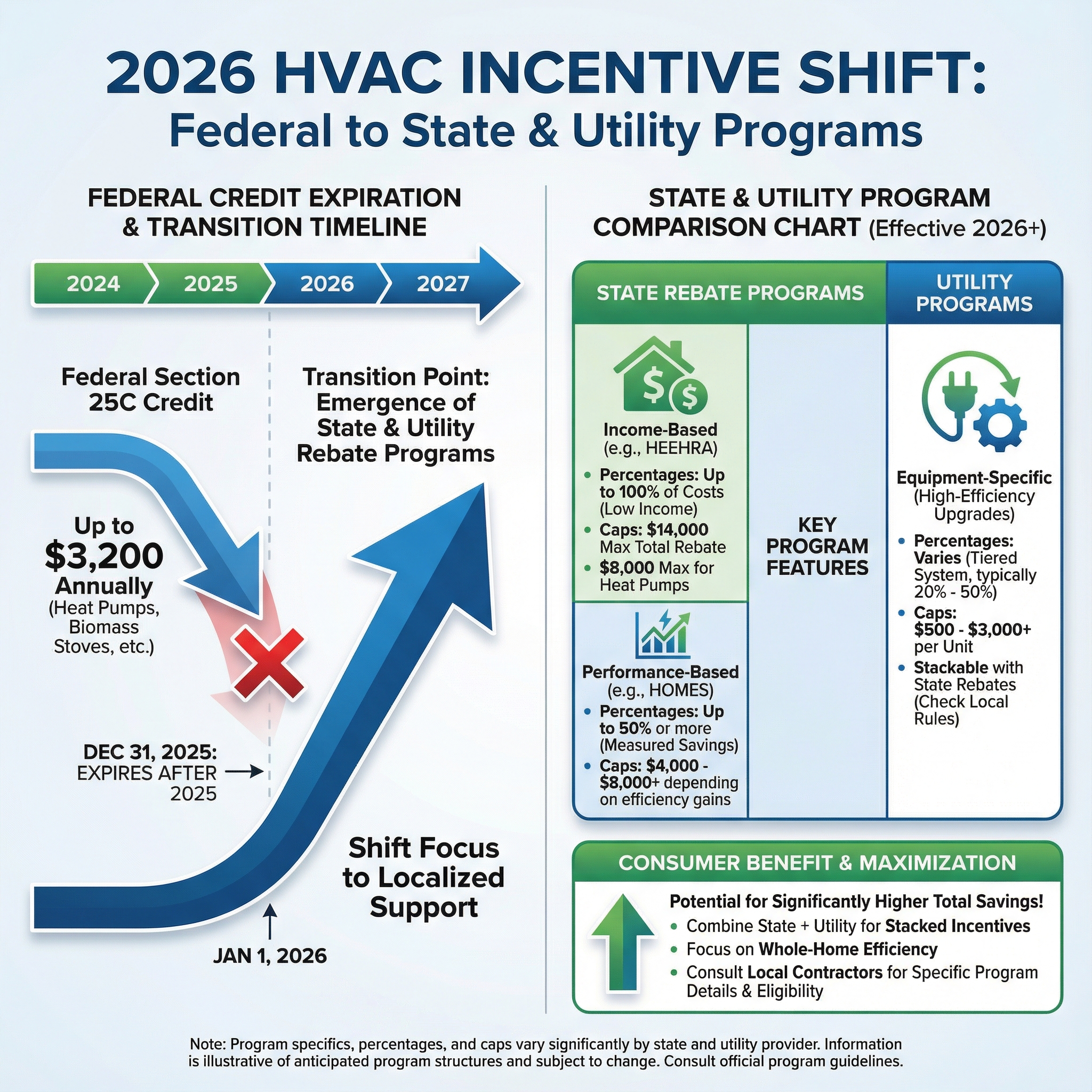
If you are buying a new HVAC system in 2026, federal tax credits can cut your costs by thousands. These incentives aren't new, but the 2022 Inflation Reduction Act significantly raised the stakes for homeowners who choose high-efficiency models over standard units.
The 25C credit is the main tool for HVAC upgrades. Unlike a deduction that lowers your taxable income, this is a dollar-for-dollar reduction of your tax bill. Most equipment qualifies for a $1,200 annual cap, though heat pumps have a separate, higher limit.
To qualify, the equipment must meet certain energy efficiency standards set by the Department of Energy (DOE) and ENERGY STAR. This means looking for specific SEER, HSPF, and AFUE ratings, which we will explore in detail later. Keep in mind that the credit applies to both labor and equipment costs, making it a more comprehensive benefit than some previous incentives. It’s a good idea to start researching options now, even if your planned installation is later in 2026, to understand the available rebates and ensure your chosen system will qualify.
Planning ahead is key. Don’t wait until the last minute to consider your options. By understanding the requirements and potential savings, you can make an informed decision that benefits both your wallet and the environment. Remember, these credits are subject to change, so staying updated on the latest information from the IRS and ENERGY STAR is crucial.
What equipment qualifies for 25C?
The IRS’s 25C credit is the primary pathway for homeowners to receive tax benefits for upgrading their HVAC systems. It covers a range of equipment, but not everything qualifies. The key is meeting specific efficiency standards. For air conditioners, this generally means a Seasonal Energy Efficiency Ratio (SEER) of at least 16 or higher. Furnaces need an Annual Fuel Utilization Efficiency (AFUE) of at least 95%, and heat pumps require a Heating Seasonal Performance Factor (HSPF) of at least 8.2.
These ratings aren’t just numbers; they directly impact your energy consumption and savings. A higher SEER rating means the air conditioner uses less electricity to deliver the same amount of cooling. Similarly, a higher AFUE rating indicates a more efficient furnace, and a higher HSPF rating means a more efficient heat pump. To find these ratings, check the EnergyGuide label on the equipment you’re considering. This label is required by law and provides a standardized way to compare energy performance.
Specifically, qualified HVAC equipment includes central air conditioners, air-source heat pumps, heat pump water heaters, and high-efficiency furnaces. Geothermal heat pumps also qualify, but they often have separate, more substantial incentives available. The maximum credit for a heat pump or central air conditioner is $2,000, while furnaces and other qualified improvements have a lower limit. Remember, the total credit you can claim across all improvements is capped at $1,200 per year.
Documentation is critical. To claim the credit, you’ll need to keep records of your purchase, including the manufacturer’s certification that the equipment meets ENERGY STAR requirements, and a receipt from your installer detailing the equipment costs and installation labor. You’ll also need to complete IRS Form 5695 when you file your taxes. The IRS website (irs.gov) provides detailed instructions and the necessary forms.
- Central air conditioners: SEER2 of 16 or higher
- Furnaces: AFUE of at least 95%
- Heat Pumps: HSPF of at least 8.2
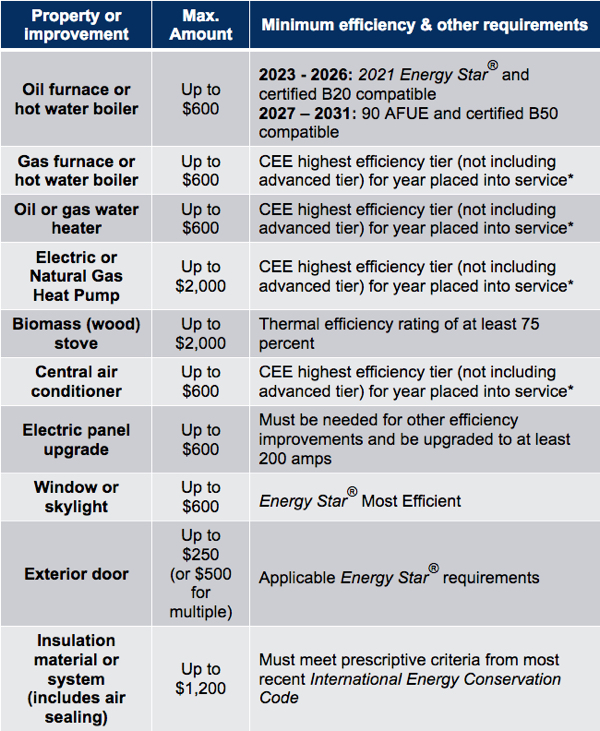
2026 HVAC Energy Efficiency Tax Credit Eligibility
| Equipment Type | Minimum Efficiency Rating | Maximum Credit Amount | Notes |
|---|---|---|---|
| Heat Pump | Specific requirements are still being defined for 2026, but generally require substantial improvement over existing standards. | Up to $2,000 | Credit is subject to annual limitations and income requirements as defined by the IRS. |
| Air Conditioner | Similar to heat pumps, 2026 standards are evolving, but will necessitate higher SEER ratings than currently required. | Up to $1,500 | Must meet or exceed any minimum efficiency standards set by the Department of Energy. |
| Furnace (Natural Gas) | Efficiency is measured by Annual Fuel Utilization Efficiency (AFUE). | Up to $750 | Qualifying furnaces must demonstrate improved efficiency compared to older models. |
| Boiler (Oil) | Efficiency is also measured by AFUE. | Up to $750 | Oil boilers must meet specific AFUE requirements to qualify for the credit. |
| Heat Pump Water Heater | Requires a minimum HSPF rating. | Up to $2,000 | This credit is separate from the heat pump system credit and may be combined. |
| Air Conditioner (Central) | Qualifying systems must meet or exceed efficiency standards. | Up to $1,500 | Installation must be in the taxpayer’s existing home. |
| Furnace (Propane) | Efficiency is measured by AFUE. | Up to $750 | Must be installed in the taxpayer's existing home. |
Illustrative comparison based on the article research brief. Verify current pricing, limits, and product details in the official docs before relying on it.
The $2,000 heat pump incentive
Heat pumps are receiving a particularly strong boost from the 2026 energy efficiency tax credits. The IRS is prioritizing heat pumps because of their ability to both heat and cool efficiently, using electricity instead of fossil fuels. This aligns with broader goals to reduce carbon emissions and transition to cleaner energy sources. As a result, heat pumps are eligible for a larger credit than many other HVAC systems – up to $2,000.
There are two main types of heat pumps: air-source and geothermal. Air-source heat pumps are the more common and affordable option, transferring heat between your home and the outside air. Geothermal heat pumps, while more expensive to install, tap into the earth's constant temperature, offering even greater efficiency. Both types qualify for the 25C credit, though geothermal systems may also be eligible for additional incentives.
A growing focus is on cold-climate heat pumps. Traditional heat pumps can lose efficiency in very cold temperatures, requiring supplemental heating. Cold-climate heat pumps are designed to maintain performance even in sub-zero weather. The IRS is encouraging the adoption of these systems, and they fully qualify for the tax credit. Look for models that are ENERGY STAR certified for cold-climate performance.
The credit covers the entire system, including both indoor and outdoor units. To get the money, the combined system must hit an HSPF of 8.2. I've seen homeowners buy an efficient compressor only to find their old indoor coil disqualifies the whole setup.
- Air-Source Heat Pumps: Transfer heat between your home and the outside air.
- Geothermal Heat Pumps: Tap into the earth’s constant temperature.
State & Local Rebates: Beyond Federal Credits
While the federal tax credits offer significant savings, don't overlook the potential for state and local rebates. Many states and utility companies offer their own incentives to promote energy efficiency, and these can be combined with the federal credit in many cases. However, the rules vary widely, so it’s essential to research what’s available in your area.
The Database of State Incentives for Renewables & Efficiency (DSIRE) is an excellent resource for finding state-specific rebates and programs (dsireusa.org). This database provides a comprehensive overview of incentives across the country, including rebates for HVAC systems, heat pumps, and other energy-efficient upgrades. You can search by state and program type to find relevant opportunities.
The ability to 'stack' federal and state/local rebates depends on the specific programs. Generally, you can claim the federal tax credit on the total cost of the equipment and installation, and then apply any state or local rebates to reduce your out-of-pocket expense. However, some programs may have limitations or require you to adjust the basis of your tax credit. Always read the fine print.
For example, California offers various rebates through its TECH Clean California program, while New York has incentives available through NYSERDA. Many utility companies also offer rebates for installing high-efficiency HVAC systems. The amounts and requirements vary, so it’s important to check with your local utility provider and state energy office.
State HVAC Incentives
- Alabama - Offers rebates through the Alabama Power and Tennessee Valley Authority (TVA) for qualifying HVAC systems. Rebates vary based on system efficiency and type. Check utility websites for details.
- California - Features the Self-Generation Incentive Program (SGIP) which, while primarily for solar, can sometimes be paired with efficient HVAC systems. Additionally, utility-specific programs like those from Southern California Edison (SCE) and Pacific Gas and Electric (PG&E) offer rebates.
- Florida - Offers limited statewide rebates, but many local utility companies, such as Florida Power & Light (FPL) and Duke Energy Florida, provide incentives for installing high-efficiency HVAC equipment.
- Massachusetts - The Mass Save program provides significant rebates and financing options for qualifying HVAC upgrades, including heat pumps and central AC systems. Rebate amounts are tiered based on performance.
- New York - NYSERDA (New York State Energy Research and Development Authority) offers rebates and incentives through programs like EmPower+ and Enhanced Equipment Incentives for efficient HVAC systems.
- Texas - Rebates are primarily offered through local utility companies. Austin Energy, for example, has programs for high-efficiency AC units and heat pumps. Check with your local provider.
- Washington - Washington State offers incentives through programs like the Energy Smart program, and many local utilities provide additional rebates for energy-efficient HVAC installations.
Installation Costs: What to Expect
Understanding the costs associated with HVAC installation is crucial before you commit to a new system. Prices vary significantly depending on the type of system, its size, the complexity of the installation, and your location. A basic central air conditioner installation can range from $3,500 to $7,000, while a high-efficiency furnace installation typically costs between $4,000 and $10,000.
Heat pumps generally fall in the $4,000 to $12,000 range for installation, but geothermal systems can easily exceed $20,000 due to the extensive ground work required. Additional costs can include ductwork modifications (if needed), electrical upgrades, and permits. Labor rates also vary by region and contractor.
The tax credits and rebates can significantly reduce these costs. For example, a $6,000 heat pump installation could be reduced to $4,000 with the $2,000 federal tax credit, and potentially further reduced with state or local rebates. It's essential to get multiple quotes from qualified installers to compare prices and understand the scope of work.
Don’t focus solely on the upfront cost. Consider the long-term savings from reduced energy bills. A more efficient system may have a higher initial price, but it can pay for itself over time through lower operating costs. Use online energy savings calculators to estimate your potential savings based on your local climate and energy rates.
Finding a Qualified Installer
Choosing the right HVAC installer is just as important as selecting the right equipment. A qualified installer will ensure your system is installed correctly, maximizing its efficiency and lifespan. Look for contractors who are NATE (North American Technician Excellence) certified, as this demonstrates a commitment to professional development and expertise.
Always verify that the contractor is licensed and insured. Licensing ensures they meet local regulations, and insurance protects you from liability in case of accidents or damage during installation. Check online reviews and ask for references from previous customers. Don’t hesitate to contact those references and ask about their experience.
When getting quotes, ask potential installers about their experience with energy-efficient systems and their knowledge of the available tax credits and rebates. A good contractor will be able to explain the process, help you with the paperwork, and ensure your installation qualifies for the incentives. They should also provide a detailed written estimate outlining the scope of work, materials, and labor costs.
Avoid contractors who offer significantly lower prices than others. This could be a sign of substandard work or hidden fees. Prioritize quality and expertise over price. A properly installed system will save you money in the long run through reduced energy bills and fewer repairs.
No comments yet. Be the first to share your thoughts!