
New federal HVAC rebates for 2026
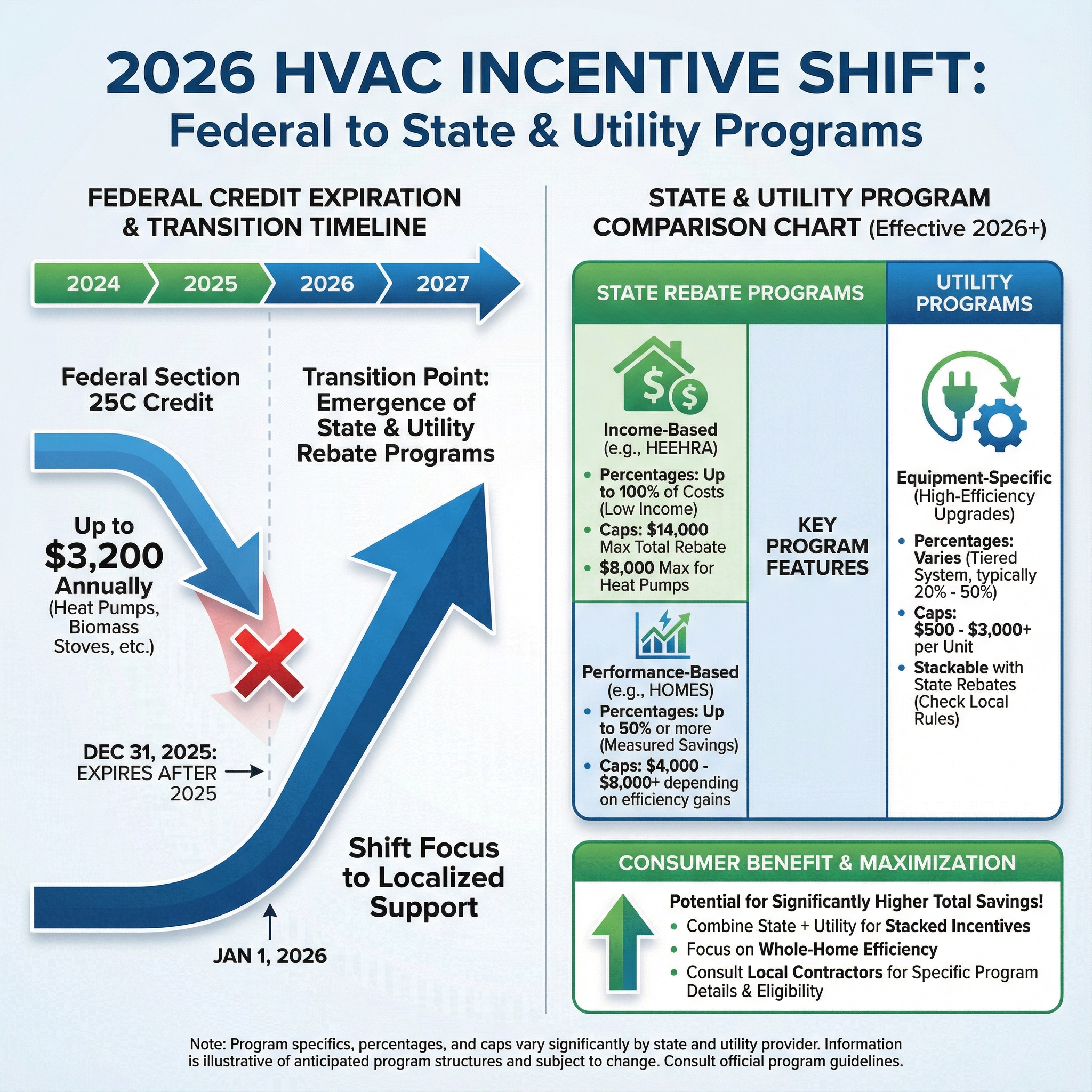
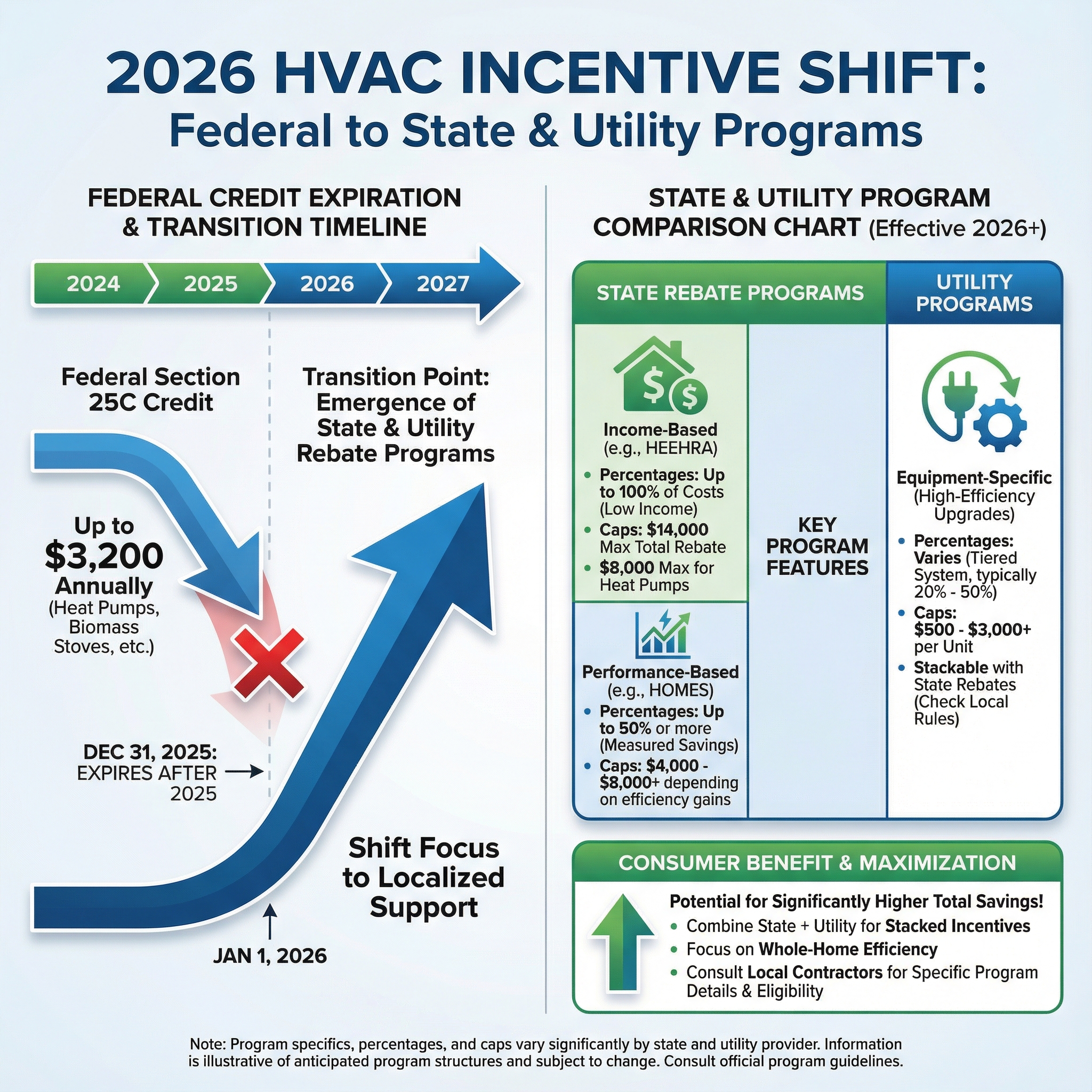
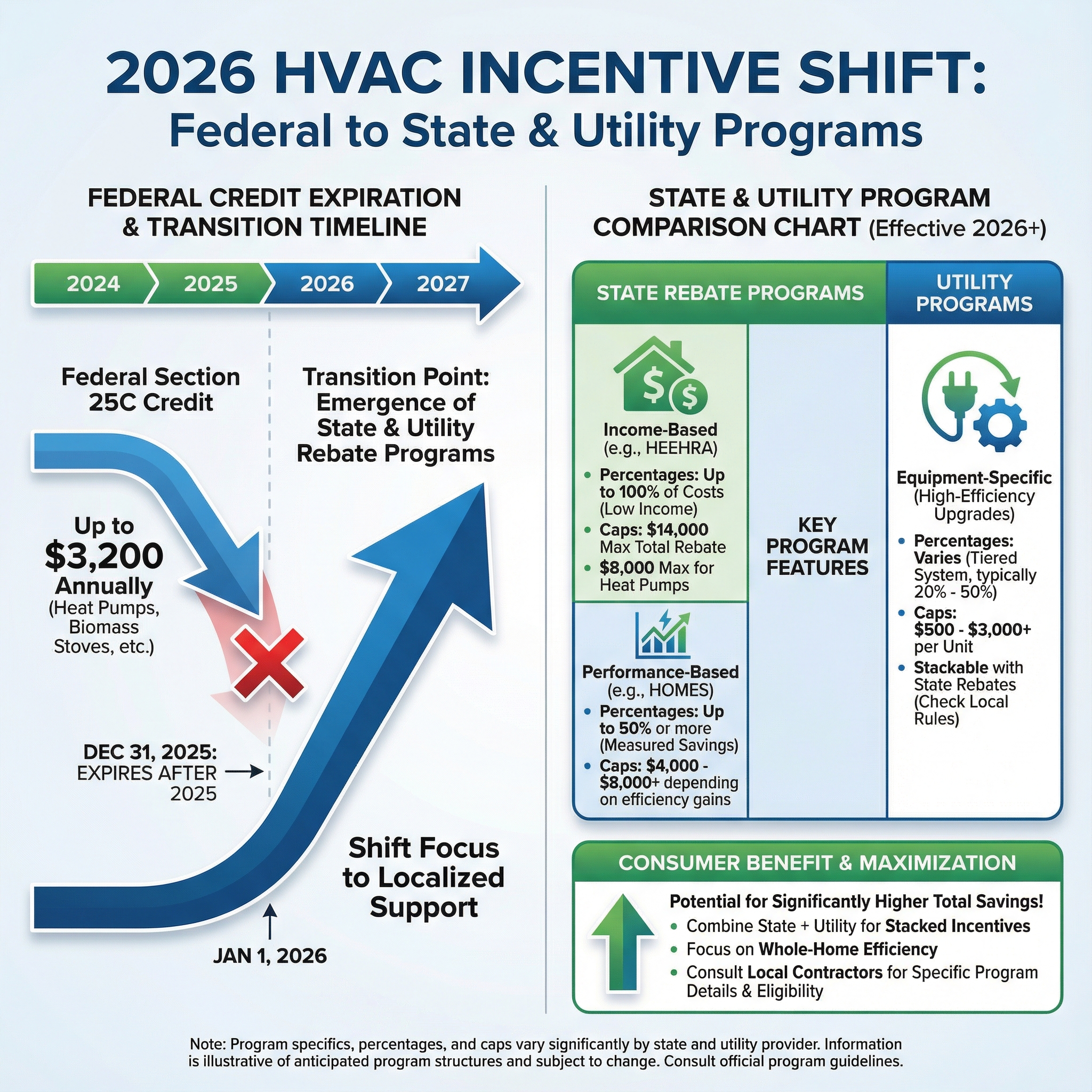
Big changes are coming to how the federal government incentivizes energy-efficient home improvements. Starting in 2026, the way we approach HVAC upgrades will shift significantly. The Inflation Reduction Act, passed in 2022, is the driving force behind these changes, aiming to lower energy costs and reduce carbon emissions for homeowners across the country.
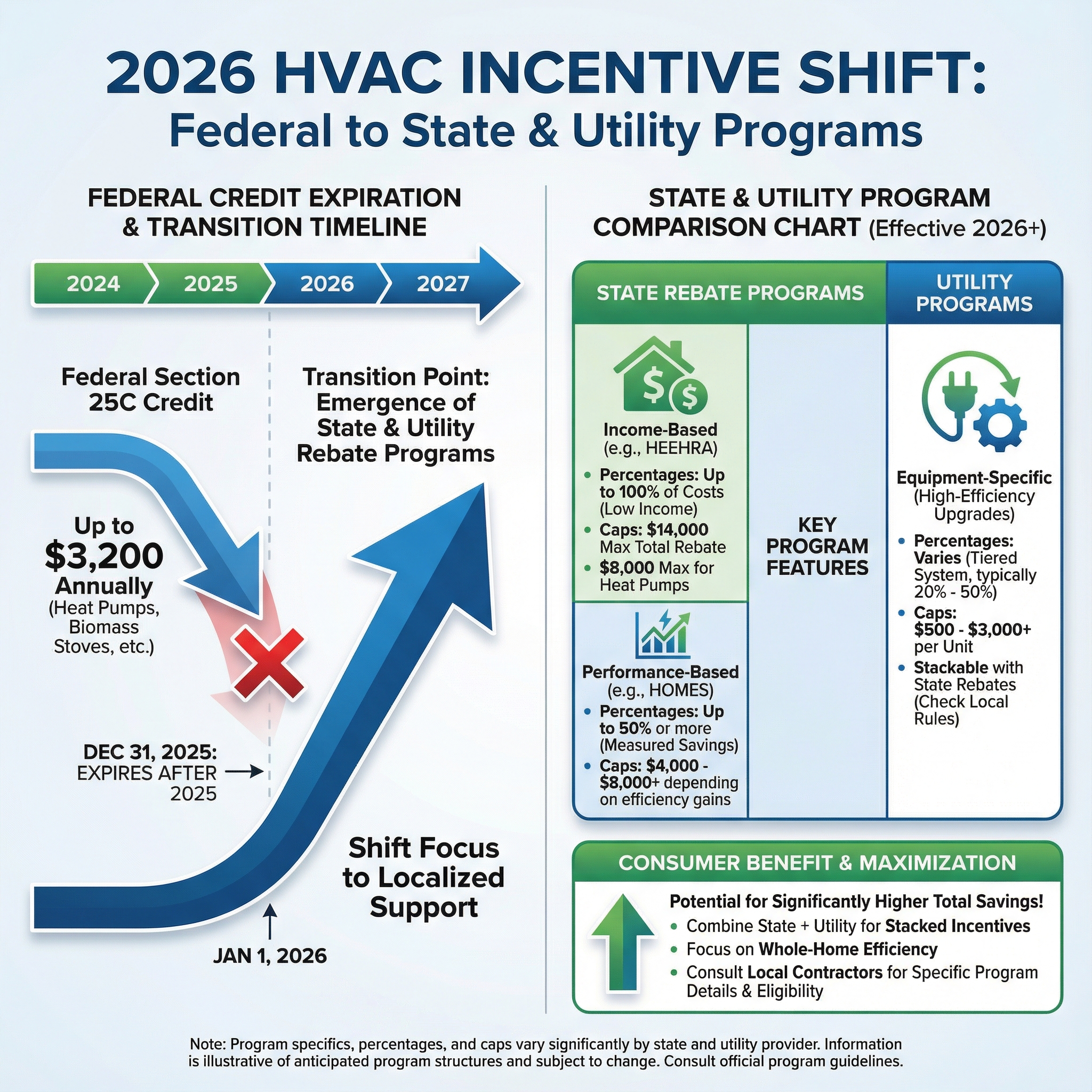
For years, many homeowners have benefited from federal tax credits for installing qualifying energy-efficient equipment. These credits reduce your tax liability, but only after you’ve filed and potentially require upfront costs you won’t see back immediately. The 2026 changes move toward direct rebates – essentially, instant discounts – at the point of sale for many HVAC upgrades. This is a fundamental shift, making these improvements more accessible.
This isn't a free upgrade. You'll still pay for part of the system, but the rebate hits your wallet immediately rather than months later at tax time. Your actual savings depend on your household income and the specific model you pick. I've seen estimates where low-income households cover nearly the entire cost of a heat pump, while others might just get a few thousand off.
The move to rebates is intended to encourage quicker adoption of energy-efficient technologies. By making upgrades more affordable upfront, more homeowners are expected to participate. This, in turn, should contribute to a reduction in overall energy consumption and a more sustainable future. But navigating the new system will require some research, and that's where we can help.
Equipment that qualifies for savings
The 2026 rebates will primarily focus on ENERGY STAR certified HVAC equipment. ENERGY STAR is a program run by the U.S. Environmental Protection Agency (EPA) and the Department of Energy, identifying products that meet strict energy efficiency guidelines. To qualify for a rebate, your new HVAC system must carry the ENERGY STAR label, and it’s important to verify this before making any purchases.
Several types of HVAC systems are eligible for rebates, including central air conditioners, heat pumps (both air-source and geothermal), furnaces, and boilers. However, there are minimum efficiency standards that each system must meet. For central air conditioners, look for a SEER (Seasonal Energy Efficiency Ratio) rating of at least 15, and an EER (Energy Efficiency Ratio) of 12.2 or higher. These ratings indicate how efficiently the unit cools your home.
Heat pumps, a particularly promising technology, have their own set of standards. Air-source heat pumps need an HSPF (Heating Seasonal Performance Factor) of at least 8.8, while geothermal heat pumps must meet specific COP (Coefficient of Performance) requirements. Furnaces and boilers must achieve an AFUE (Annual Fuel Utilization Efficiency) rating of 80% or higher. These numbers are crucial because they directly impact the amount of the rebate you’ll receive.
You can't DIY this if you want the money. The program requires a licensed contractor to sign off on the work. They have to prove the system meets local codes and matches the efficiency ratings promised on the box. If you try to install a furnace yourself, you'll likely disqualify the entire rebate.
- Central air conditioners with a SEER of 15 or higher
- Air-Source Heat Pumps: HSPF of 8.8+
- Geothermal Heat Pumps: Specific COP requirements (consult ENERGY STAR guidelines)
- Gas furnaces hitting at least 80% AFUE
- Boilers: AFUE of 80%+
Minimum Efficiency Requirements for Potential 2026 HVAC Tax Credit Eligibility
| System Type | Minimum Efficiency Standard | Notes |
|---|---|---|
| Central Air Conditioner | Qualifying SEER rating | Specific SEER ratings required for tax credits are still being finalized. ENERGY STAR qualified models are likely to meet requirements. |
| Central Air Conditioner | Qualifying EER rating | Specific EER ratings required for tax credits are still being finalized. ENERGY STAR qualified models are likely to meet requirements. |
| Air Source Heat Pump (Cooling Mode) | Qualifying SEER rating | Specific SEER ratings required for tax credits are still being finalized. ENERGY STAR qualified models are likely to meet requirements. |
| Air Source Heat Pump (Heating Mode) | Qualifying HSPF | Specific HSPF ratings required for tax credits are still being finalized. Higher HSPF values indicate greater efficiency. |
| Furnace (Natural Gas) | Qualifying AFUE | Specific AFUE ratings required for tax credits are still being finalized. Higher AFUE values indicate greater efficiency. |
| Furnace (Oil) | Qualifying AFUE | Specific AFUE ratings required for tax credits are still being finalized. Higher AFUE values indicate greater efficiency. |
| Package Unit (Heating & Cooling) | Qualifying SEER/EER/HSPF/AFUE | Requirements will depend on the specific configuration (e.g., heat pump vs. furnace). Specific ratings are still being finalized. |
Illustrative comparison based on the article research brief. Verify current pricing, limits, and product details in the official docs before relying on it.
Why heat pumps get the biggest cuts
Of all the HVAC systems eligible for rebates, heat pumps are poised to benefit the most. This isn't just about the size of the potential rebate – although those are significant – it’s about the technology itself. Heat pumps offer a fundamentally more efficient way to heat and cool your home compared to traditional furnaces and air conditioners.
Unlike furnaces that generate heat by burning fuel, heat pumps transfer heat. In the winter, they extract heat from the outside air (yes, even in cold temperatures) and move it indoors. In the summer, they reverse the process, removing heat from your home and releasing it outside. This transfer process requires less energy than generating heat, leading to lower utility bills.
For years, a common misconception was that heat pumps couldn't effectively heat homes in colder climates. That’s simply no longer true. Advancements in heat pump technology, particularly the development of cold-climate heat pumps, have dramatically improved their performance in sub-freezing temperatures. These systems are designed to extract heat even from very cold air, providing reliable heating even on the coldest winter nights.
The rebates aren’t limited to just the heating and cooling components of a heat pump system. Heat pump water heaters, which use the same heat pump technology to heat water, are also likely to qualify for substantial rebates. This offers another opportunity for homeowners to significantly reduce their energy consumption and save money. Considering a heat pump water heater alongside a heat pump HVAC system can maximize your overall savings.
- Cold-Climate Heat Pumps: Designed for efficient operation in sub-freezing temperatures.
- Heat Pump Water Heaters: Utilize heat pump technology to heat water efficiently.
Insulation and smart thermostats
Don't limit your thinking to just the HVAC unit itself. Several related upgrades can further boost your energy efficiency and potentially qualify for additional incentives. These upgrades often work synergistically with a new HVAC system, maximizing your overall savings. Think of it as a holistic approach to home energy efficiency.
Smart thermostats are a relatively inexpensive upgrade that can have a significant impact. These thermostats learn your heating and cooling preferences and automatically adjust the temperature to optimize energy usage. Duct sealing is another important consideration. Leaky ducts can waste a substantial amount of energy, reducing the efficiency of your HVAC system. Sealing these leaks can improve airflow and lower your energy bills.
Improved insulation is perhaps the most impactful upgrade you can make. Proper insulation helps to keep your home warm in the winter and cool in the summer, reducing the workload on your HVAC system. Window replacements, particularly with ENERGY STAR certified windows, can also significantly reduce heat loss and gain. These upgrades can be combined with the HVAC rebates, potentially leading to even greater savings.
Many states and local municipalities offer their own rebates and incentives for energy-efficient upgrades, in addition to the federal rebates. These programs can often be stacked with the federal incentives, further reducing your upfront costs. It's worth checking with your state energy office and local utility companies to see what programs are available in your area. Find HVAC Services in your area to help with this process.
How to get your money
The exact details of the rebate process are still being finalized, but we can anticipate some key features. The current plan leans towards a point-of-sale discount, meaning the rebate will be applied directly to the purchase price of the HVAC equipment at the time of sale. This is a major improvement over traditional mail-in rebates, which require you to pay upfront and then wait for reimbursement.
However, it’s likely that some level of documentation will still be required. You'll almost certainly need to provide proof of purchase, installation receipts, and documentation verifying that the equipment meets the ENERGY STAR standards. Keep all your paperwork organized and readily available. Your HVAC contractor should be able to guide you through the documentation process.
Expect some chaos when this starts. Rolling out a federal program through state offices is usually messy. You'll want a contractor who has already done the paperwork for other customers so you aren't the guinea pig for their first application.
Finding a contractor who is already familiar with the rebate program will be a significant advantage. They can help you select qualifying equipment, ensure proper installation, and submit the necessary documentation. Don’t hesitate to ask potential contractors about their experience with the rebates and their willingness to handle the paperwork for you. It’s a good sign if they’re already prepared.
Potential Savings: Real-World Examples
Estimating potential savings is complex, as it depends on several factors, including your location, energy usage, and the specific equipment you choose. However, we can look at some hypothetical scenarios to illustrate the potential impact of the 2026 rebates. These are estimates only and should not be considered guarantees.
Let's say you're replacing an old, inefficient furnace with a new ENERGY STAR certified furnace that costs $4,000. With a potential rebate of up to $2,000 (depending on your income and the furnace's AFUE rating), your out-of-pocket cost could be reduced to $2,000. Over the lifetime of the furnace, you could save hundreds or even thousands of dollars on energy bills.
If you upgrade to a heat pump system costing $8,000, the potential rebate could be even larger, potentially reaching $4,000 or more. This could bring your net cost down to $4,000, and the long-term energy savings could be substantial. Remember that heat pumps are particularly efficient, and they can also provide both heating and cooling.
It’s important to note that these are just examples. Actual savings will vary depending on your individual circumstances. We encourage you to consult with a qualified HVAC contractor to get a personalized estimate based on your specific needs. Please visit energy.gov for more details and potential savings calculators as they become available. Heating and Cooling Services can vary in price, so get quotes from multiple companies.
Questions for Potential HVAC Contractors
- Are you licensed and insured? Verify their credentials with your state’s licensing board and confirm they carry adequate insurance to protect your property.
- Do you have experience with ENERGY STAR certified equipment? ENERGY STAR certification indicates the equipment meets high efficiency standards, crucial for maximizing tax credit eligibility.
- Can you explain the rebate process? Understand how rebates from manufacturers, state programs, and the federal tax credits work, and what documentation is required.
- What is your warranty policy? A comprehensive warranty protects your investment in the new HVAC system. Understand the terms and coverage details.
- Can you provide a detailed proposal? The proposal should clearly outline the scope of work, equipment specifications, total cost, and estimated energy savings.
- What size system do I need? A properly sized system is essential for efficiency and comfort. Ask about Manual J load calculations to ensure accurate sizing.
- Do you participate in any state or local incentive programs? Many states and municipalities offer additional rebates or incentives beyond the federal tax credits.
No comments yet. Be the first to share your thoughts!