
New HVAC tax credits for 2026
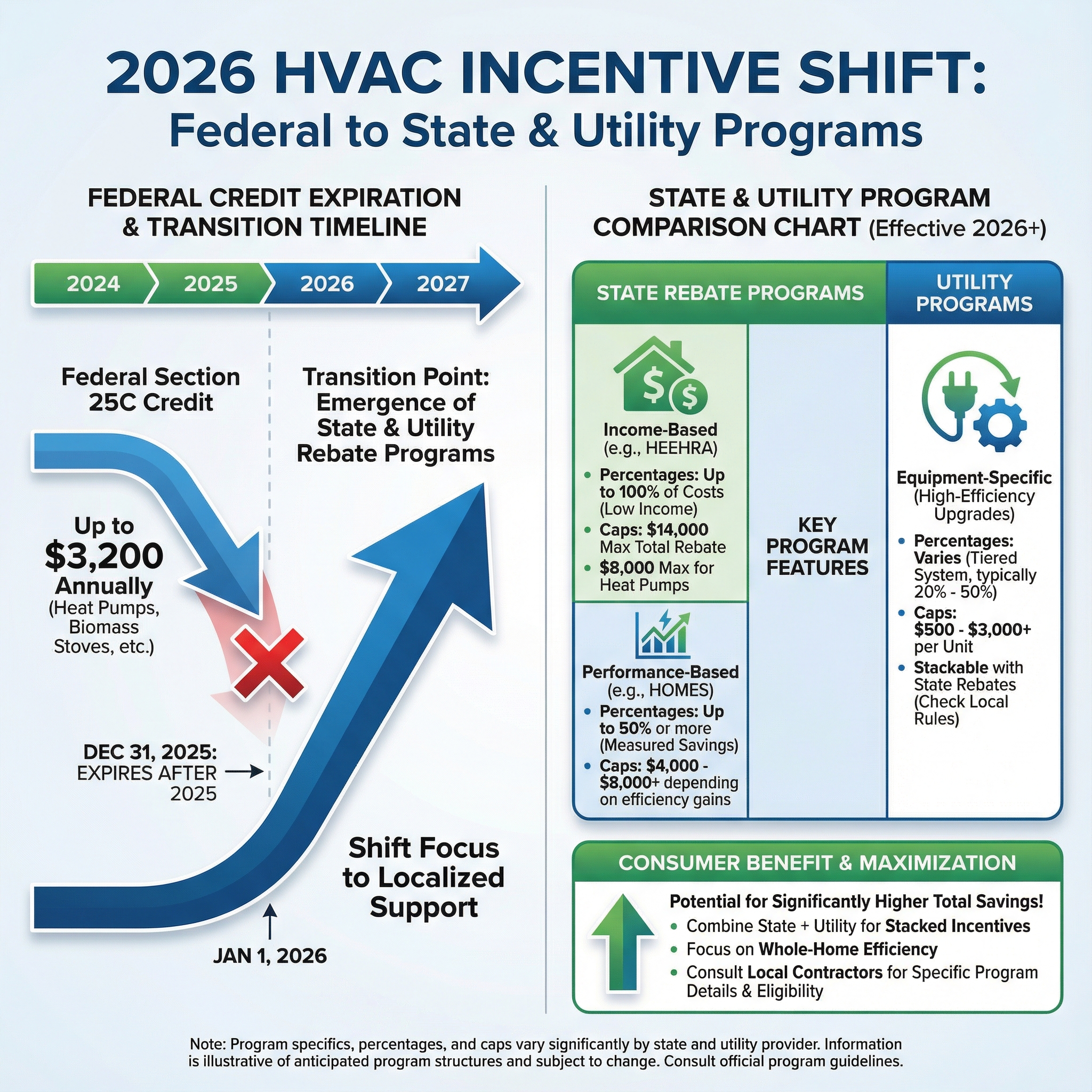
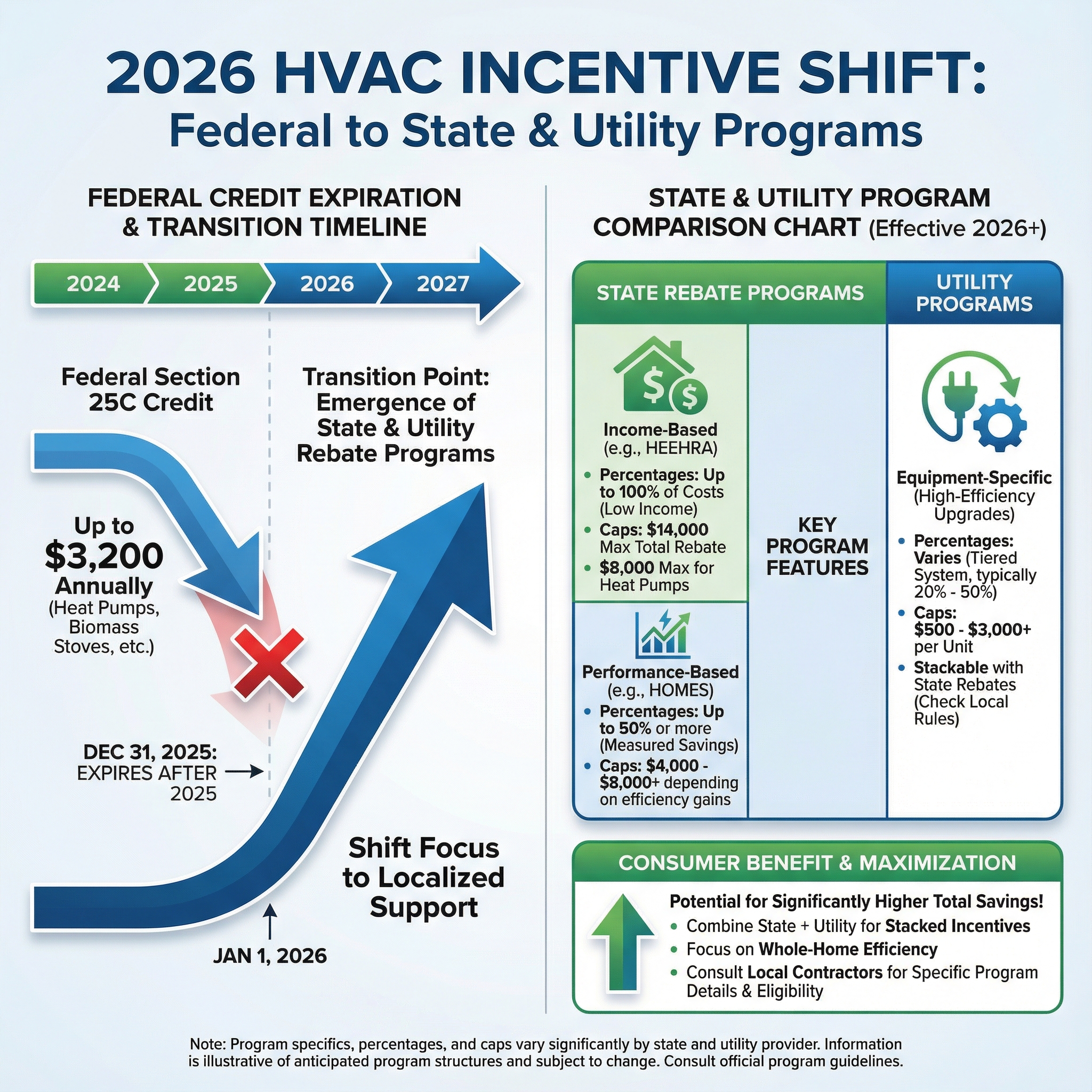
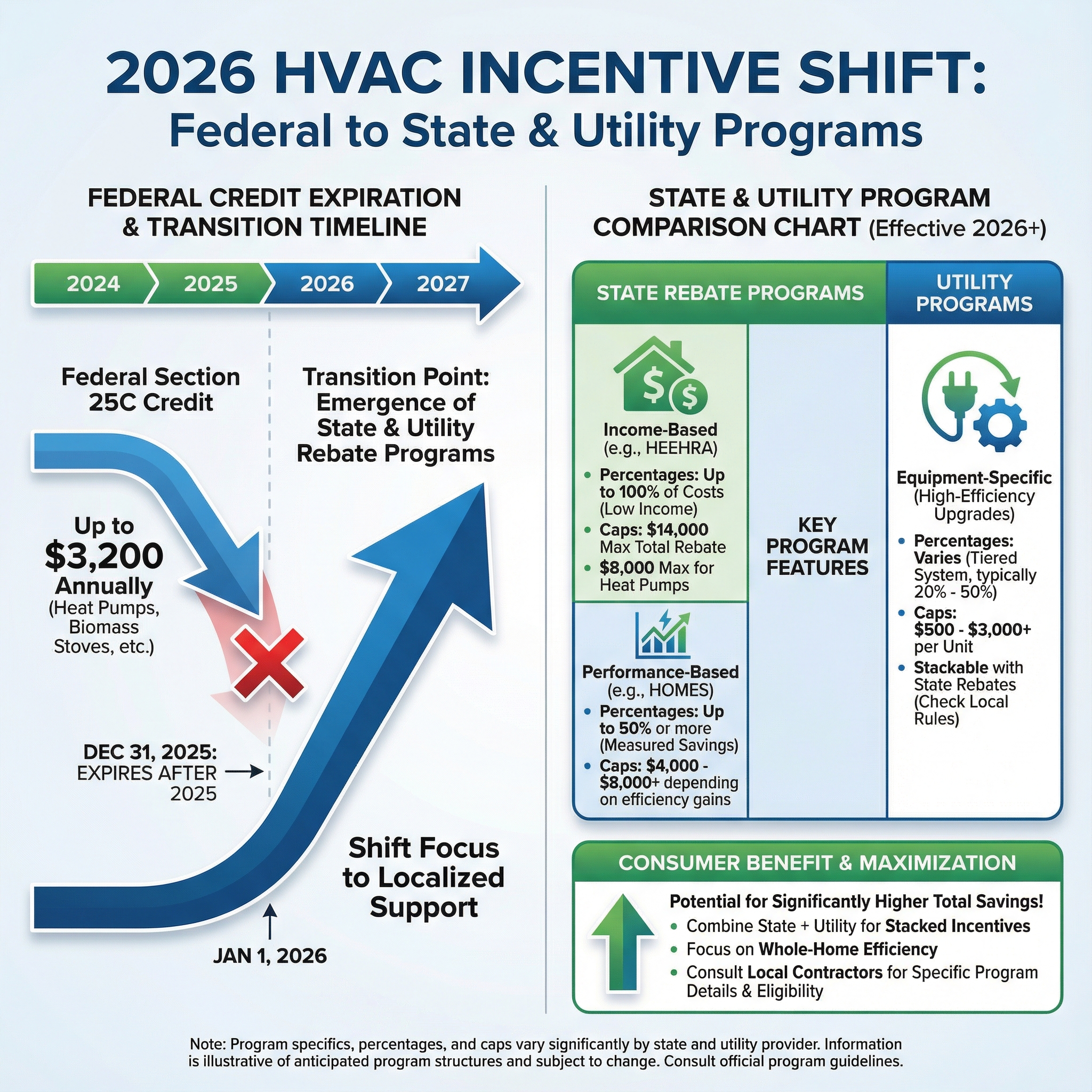
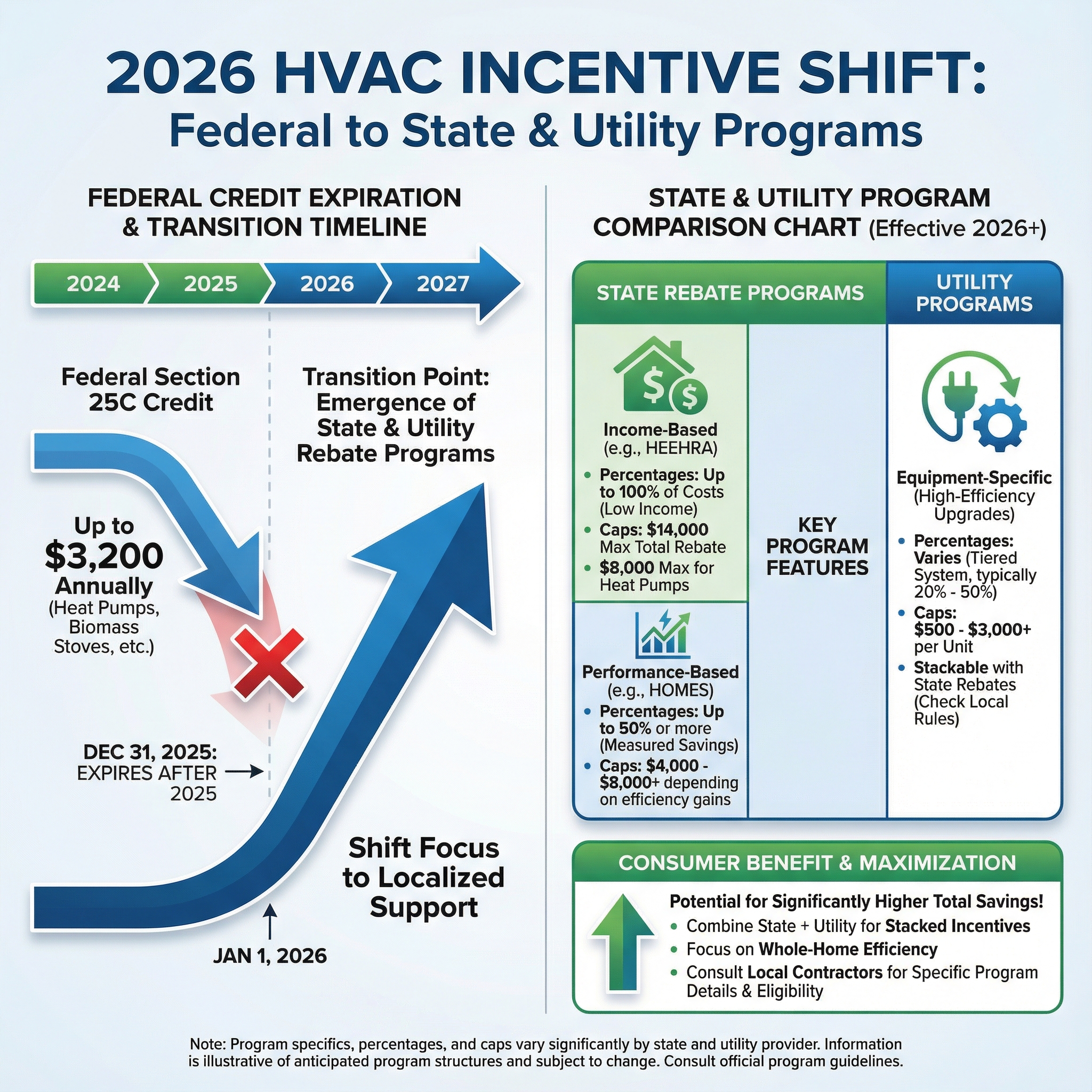
The Inflation Reduction Act is changing how you pay for heating and cooling. Starting in 2026, the shift moves from year-end tax filings to immediate rebates you get at the point of sale. It makes high-efficiency systems affordable upfront rather than making you wait for a tax refund.
The primary goal of these changes is to encourage wider adoption of energy-efficient heating and cooling technologies, ultimately reducing energy consumption and lowering utility bills. This is good news for homeowners and the environment. However, navigating these new programs and understanding your eligibility can be a bit complex.
I've looked through the federal and state requirements to find the actual numbers you need. Tax forms are a headache, so I've simplified the eligibility rules and the steps you need to take to get your money back.
Keep in mind that regulations and program details can evolve. We'll strive to keep this information current, but always verify specifics with official sources before making any decisions about HVAC installation or upgrades.
How the federal tax credit works
The federal tax credit, established by the Inflation Reduction Act, offers a substantial incentive for homeowners upgrading to energy-efficient HVAC systems. It provides a credit for 30% of the cost of qualified energy efficiency improvements made to your home. This includes the cost of the HVAC equipment itself, as well as any associated labor costs.
However, there’s a maximum credit amount of $2,000. This means even if your total qualified expenses exceed $6,667, your credit will be capped at $2,000. It’s important to understand that this is a tax credit, not a refund. A tax credit directly reduces the amount of income tax you owe—it's a dollar-for-dollar reduction of your tax liability.
To qualify for the credit, the equipment must meet specific efficiency standards. Generally, this means the HVAC system needs to be ENERGY STAR certified. The IRS provides detailed guidance on eligible improvements and how to claim the credit on Form 5695. You can find the most up-to-date information on the IRS website, irs.gov.
The credit applies to existing homes, and there's no income limit to qualify. This makes it accessible to a broad range of homeowners. It’s also important to note that these credits are for improvements to your primary residence; they do not apply to rental properties or secondary homes. The tax credit is available for expenses paid or improvements made from January 1, 2023, through December 31, 2032.
Efficiency ratings your system needs
Not all HVAC systems automatically qualify for the federal tax credit. The Inflation Reduction Act sets specific efficiency standards that equipment must meet. These standards are measured using several different ratings, including SEER, EER, HSPF, and AFUE. Understanding these ratings is key to determining eligibility.
SEER (Seasonal Energy Efficiency Ratio) applies to air conditioners and measures cooling efficiency. To qualify, systems generally need a SEER rating of at least 15. EER (Energy Efficiency Ratio) is a measure of cooling efficiency under specific conditions, and qualifying systems typically require an EER of 12 or higher. HSPF (Heating Seasonal Performance Factor) applies to heat pumps and measures heating efficiency; look for a rating of at least 8.2.
Furnaces need an AFUE rating of 97% or higher to qualify for the smaller $600 credit. Heat pumps are the real winners here, as they qualify for the full $2,000 if they meet the Consortium for Energy Efficiency (CEE) highest tier standards.
When shopping for a new HVAC system, don't hesitate to ask your contractor about these ratings. They should be able to provide you with the specifications for each model they recommend. I'm hesitant to recommend specific brands or models, as technology is constantly evolving, but focusing on these ratings will steer you toward qualifying equipment.
HVAC System Efficiency Requirements for Federal Tax Credits (as of late 2023/early 2024)
| System Type | Efficiency Metric | Minimum Requirement | Notes |
|---|---|---|---|
| Air Conditioner (Central) | SEER | Qualifying systems must meet or exceed current ENERGY STAR criteria. Specific SEER values are subject to change based on federal guidelines. | ENERGY STAR criteria are regularly updated; check energystar.gov for the most current requirements. |
| Air Conditioner (Window Unit/Portable) | EER | Qualifying systems must meet or exceed current ENERGY STAR criteria. Specific EER values are subject to change based on federal guidelines. | ENERGY STAR criteria are regularly updated; check energystar.gov for the most current requirements. |
| Furnace (Gas) | AFUE | Qualifying systems must have an AFUE of at least 90%. | Higher AFUE ratings indicate greater efficiency and potential tax credit eligibility. |
| Heat Pump (Heating & Cooling) | HSPF | Qualifying systems must meet or exceed current ENERGY STAR criteria. Specific HSPF values are subject to change based on federal guidelines. | ENERGY STAR criteria are regularly updated; check energystar.gov for the most current requirements. |
| Heat Pump (Heating & Cooling) | SEER | Qualifying systems must meet or exceed current ENERGY STAR criteria. Specific SEER values are subject to change based on federal guidelines. | Often, heat pumps are evaluated on both HSPF and SEER ratings. |
| Heat Pump (Heating Only) | HSPF | Qualifying systems must meet or exceed current ENERGY STAR criteria. Specific HSPF values are subject to change based on federal guidelines. | Used for homes that do not require cooling. |
| Condensing Furnace (Oil) | AFUE | Qualifying systems must have an AFUE of at least 90%. | Oil furnaces are less common but can qualify with high AFUE ratings. |
Illustrative comparison based on the article research brief. Verify current pricing, limits, and product details in the official docs before relying on it.
State rebates and local savings
While the federal tax credit provides a significant incentive, many states and even local utility companies offer their own rebates and incentives for energy-efficient HVAC upgrades. These programs vary dramatically in terms of eligibility requirements, rebate amounts, and available technologies. It’s essential to research what’s available in your specific location.
The best resource for finding state-specific information is the Database of State Incentives for Renewables & Efficiency (DSIRE). You can find it at dsireusa.org. This database provides a comprehensive overview of incentives available in each state, including rebates, tax credits, and loan programs. It's a little overwhelming to navigate, but it's the most complete source.
Several states currently offer particularly generous incentives. For example, California has a robust set of programs through its utility companies, offering rebates for high-efficiency heat pumps and air conditioners. New York also provides substantial rebates through NYSERDA (New York State Energy Research and Development Authority). Massachusetts offers incentives through Mass Save.
These are just a few examples; the landscape is constantly changing. It’s crucial to check your state’s energy office website and your local utility provider’s website for the most up-to-date information.
State & Regional HVAC Rebates
- Northeast: Massachusetts - The Mass Save program offers rebates for qualifying high-efficiency heating and cooling equipment, including heat pumps and central AC systems. Income eligibility requirements may apply.
- Midwest: Michigan - DTE Energy and Consumers Energy both offer rebates on ENERGY STAR® certified HVAC systems. Rebate amounts vary based on equipment type and efficiency.
- South: North Carolina - Duke Energy offers rebates for qualified heat pumps, air conditioners, and furnaces. Specific rebates are available for income-qualified customers.
- West: California - The Self-Generation Incentive Program (SGIP) provides incentives for energy storage systems, which can be paired with HVAC systems for increased efficiency. Availability varies by utility.
- Mid-Atlantic: New Jersey - New Jersey’s Clean Energy Program offers rebates and financing for energy-efficient upgrades, including HVAC replacements. Programs often change, so checking current offerings is crucial.
- Southwest: Arizona - Arizona Public Service (APS) offers rebates on qualifying air conditioning and heat pump systems. Rebate amounts are based on SEER and HSPF ratings.
- Southeast: Georgia - Georgia Power provides rebates for ENERGY STAR® certified HVAC equipment, including heat pumps and air conditioners. Rebate amounts depend on the system’s efficiency.
Heat Pumps: The Biggest Benefit
Heat pumps are receiving a disproportionately large share of the incentives under the Inflation Reduction Act, and for good reason. They offer a highly efficient way to both heat and cool your home, using electricity instead of fossil fuels. This can lead to significant energy savings and reduced carbon emissions.
Unlike traditional furnaces that burn fuel to generate heat, heat pumps transfer heat from one place to another. In the winter, they extract heat from the outside air (even in cold temperatures) and bring it indoors. In the summer, they reverse the process, removing heat from your home and releasing it outside. This makes them a versatile and efficient option.
The federal tax credit for heat pumps can be up to $2,000, and some states offer additional rebates on top of that. This can significantly reduce the upfront cost of installing a heat pump system. There's often a misconception that heat pumps don't perform well in cold climates, but modern heat pump technology has made significant advancements.
Many newer heat pumps are designed to operate efficiently even in sub-freezing temperatures. It’s important to choose a heat pump that’s appropriately sized for your climate and home. A qualified HVAC contractor can help you determine the best option for your needs.
How to apply
Applying for the federal tax credit involves claiming it when you file your annual income taxes. You’ll need to complete IRS Form 5695, Residential Energy Credits, and attach it to your tax return. This form requires you to provide details about the qualifying improvements you made, including the cost and efficiency ratings of the equipment.
You’ll need to keep accurate records to support your claim. This includes receipts for the equipment and installation costs, as well as product specifications that demonstrate the equipment meets the eligibility requirements. Don't throw these documents away! The IRS may request them in the event of an audit.
State and local rebate programs often have their own application processes. These may involve submitting an application form, along with supporting documentation, directly to the utility company or state energy office. Be sure to read the program guidelines carefully to understand the specific requirements.
It's wise to start gathering your documentation as soon as you make the purchase and have the HVAC system installed. This will make the application process much smoother. If you're unsure about any aspect of the application process, don’t hesitate to consult with a tax professional or the program administrator.
Have you already started planning for HVAC upgrades to take advantage of the 2026 tax credits?
Federal and state rebates can significantly offset the cost of a new energy-efficient HVAC system. We want to know where you stand in the process. Vote below and share your thoughts in the comments!
No comments yet. Be the first to share your thoughts!