

New HVAC Tax Credits: A 2026 Overview
The Inflation Reduction Act of 2022 brought with it significant changes to energy efficiency incentives, and those are really starting to take shape for 2026. These new HVAC tax credits are designed to encourage homeowners to invest in upgrades that lower energy consumption and reduce their carbon footprint. It’s not just about a financial benefit; it's about a broader push toward sustainability.
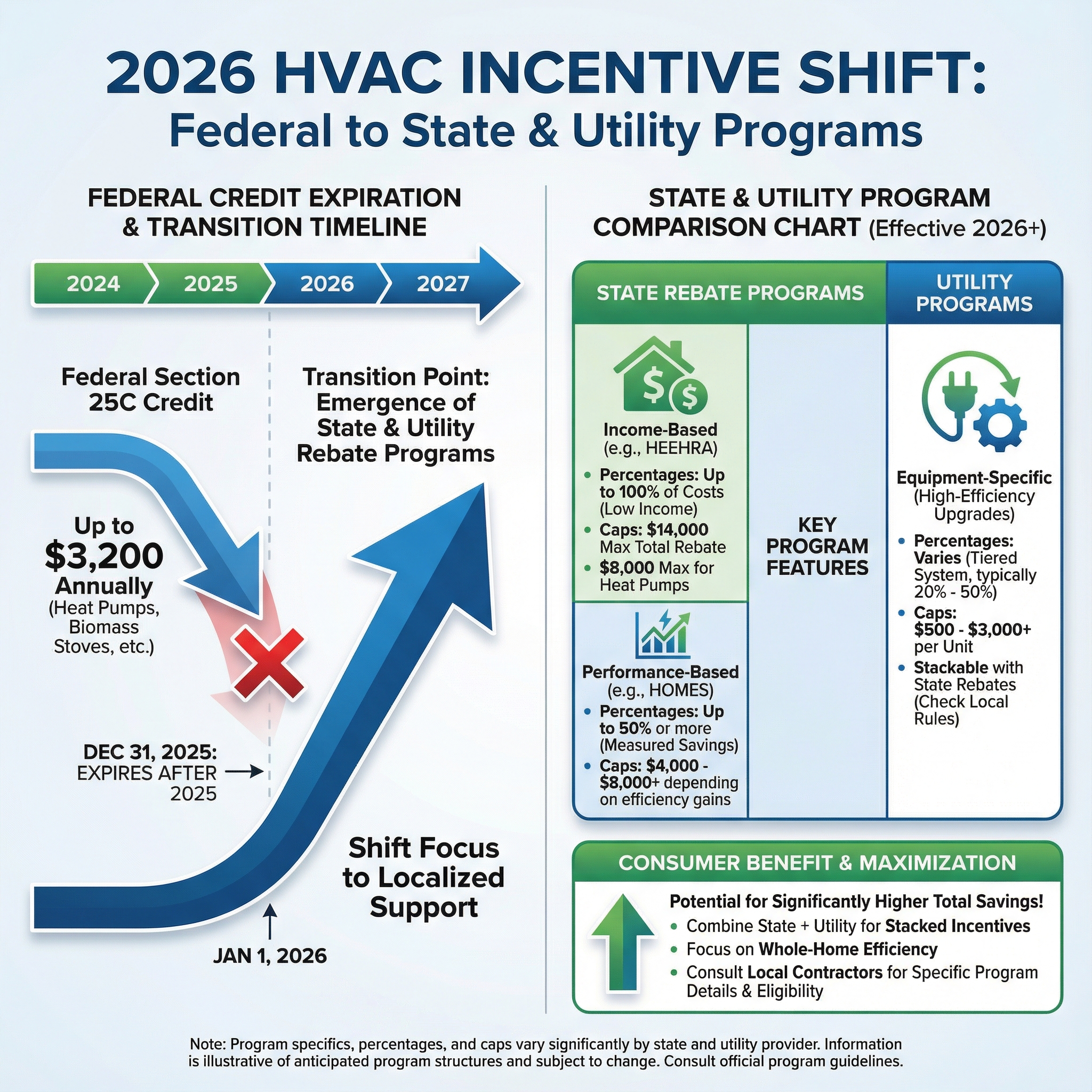
The incentives come in two main forms: federal tax credits and state/local rebate programs. The federal credits, administered by the IRS, offer direct reductions in your tax liability. Meanwhile, state and local programs often provide upfront discounts or rebates at the point of sale. These can be combined, creating substantial savings for eligible homeowners.
The potential savings are considerable. Depending on the equipment and your specific circumstances, you could be eligible for thousands of dollars in credits and rebates. We’ll break down the details of both the federal and state opportunities to help you understand what’s available and how to take advantage of them. Focusing on energy-efficient upgrades is a smart move for your wallet and the environment.
It’s important to remember that these programs are subject to change, and eligibility requirements can vary. Staying informed is key. This guide will provide you with the latest information as of November 2024, along with resources to find the most up-to-date details for your location. For those needing heating and cooling services or HVAC installation, understanding these credits is a great first step.
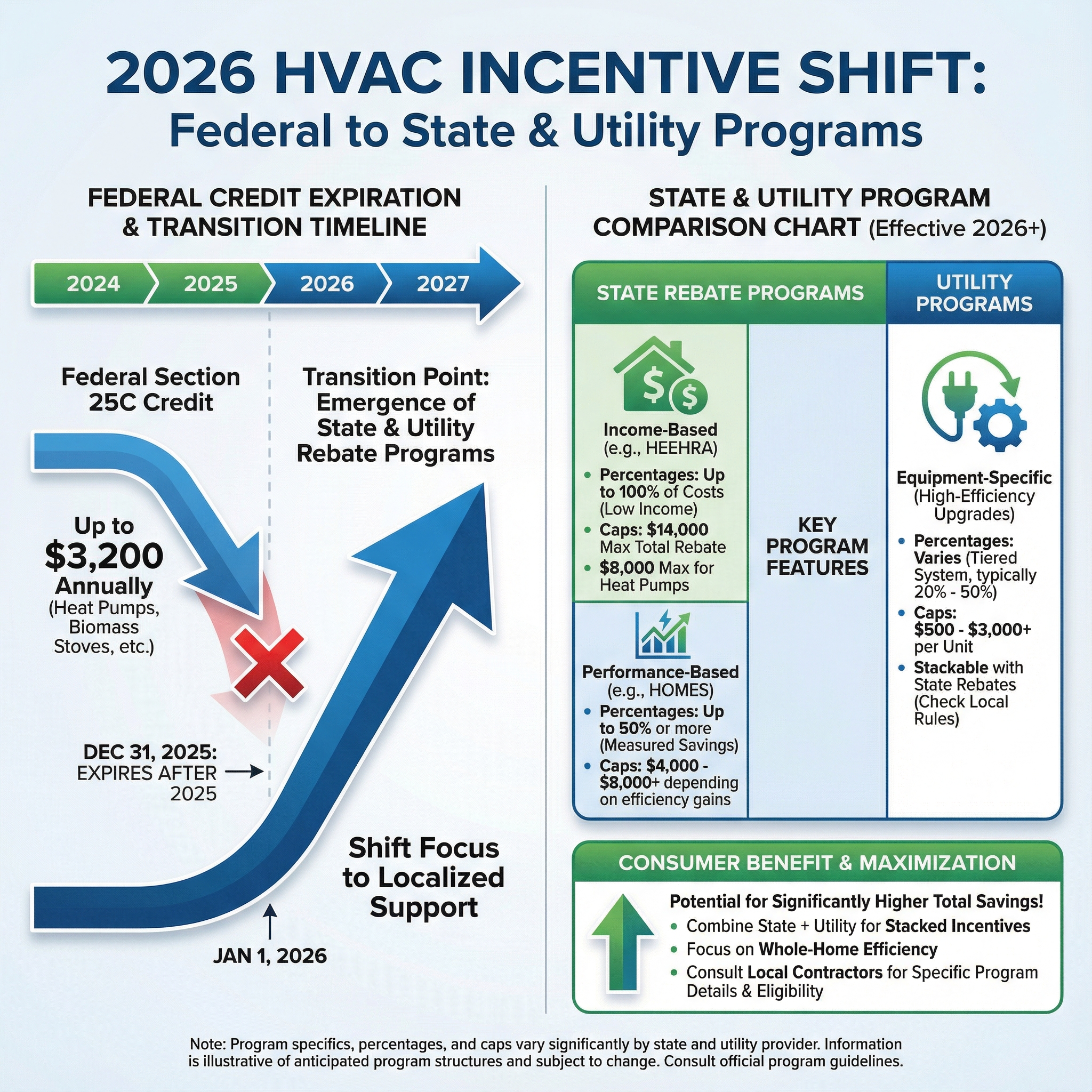
Federal Energy Efficient Home Improvement Credit Details
The federal Energy Efficient Home Improvement Credit, as outlined by the IRS, allows you to claim a credit for a portion of the cost of qualifying energy-efficient home improvements. As of now, the maximum credit available is $3,500. This isn't a one-size-fits-all figure, though; the amount you receive depends on the specific upgrades you make.
Eligible equipment includes heat pumps, air conditioners, furnaces, boilers, and water heaters – but they must meet specific efficiency requirements. For air conditioners and heat pumps, look for systems with a Seasonal Energy Efficiency Ratio (SEER) of 16 or higher. Heating systems like furnaces and boilers need an Annual Fuel Utilization Efficiency (AFUE) of 85% or higher. Heat pumps also require a Heating Seasonal Performance Factor (HSPF) of at least 8.2.
The credit applies differently depending on whether you’re replacing an entire system or just individual components. A full system replacement – say, swapping out both your furnace and air conditioner for high-efficiency models – will likely qualify for a larger credit than replacing just a single component. It's crucial to keep detailed records of all costs and product specifications.
Beyond those common HVAC components, the federal credit also extends to qualified biomass equipment, offering a 30% tax credit. This is a significant incentive for those considering alternative heating sources. It’s important to note that some improvements, like those that simply maintain existing efficiency levels, won't qualify for the credit. The goal is to increase energy efficiency, not just preserve it.
To understand the exact requirements for your specific project, the IRS provides detailed guidance on their website. You can find comprehensive information and frequently asked questions at irs.gov regarding the Energy Efficient Home Improvement Credit. Remember to consult a tax professional for personalized advice.
- Air Conditioners & Heat Pumps: SEER 16 or higher
- Furnaces: AFUE 85% or higher
- Boilers: AFUE 85% or higher
- Heat Pumps: HSPF 8.2 or higher
Federal Tax Credit Eligibility for HVAC Equipment (Based on IRS Information)
| Equipment Type | Minimum Efficiency Requirement | Maximum Credit Amount | Credit Percentage |
|---|---|---|---|
| Air Conditioner | Specific requirements vary; must meet or exceed ENERGY STAR criteria. | $300 | Up to 30% of costs |
| Heat Pump | Specific requirements vary; must meet or exceed ENERGY STAR criteria. | $2,000 | Up to 30% of costs |
| Furnace | Annual Fuel Utilization Efficiency (AFUE) of at least 95%. | $2,000 | Up to 30% of costs |
| Boiler | Annual Fuel Utilization Efficiency (AFUE) of at least 95%. | $2,000 | Up to 30% of costs |
| Water Heater | Must meet ENERGY STAR requirements. | $2,000 | Up to 30% of costs |
| Heat Pump Water Heater | Must meet ENERGY STAR requirements. | $2,000 | Up to 30% of costs |
Illustrative comparison based on the article research brief. Verify current pricing, limits, and product details in the official docs before relying on it.
Heat Pumps: The Biggest Credit Boost
Heat pumps are receiving particular attention under the Inflation Reduction Act due to their exceptional energy efficiency. Unlike traditional heating systems that generate heat by burning fuel, heat pumps move heat, making them significantly more efficient. This means lower energy bills and a reduced carbon footprint. They can both heat and cool your home, offering a versatile solution.
There are two main types of heat pumps: air-source and geothermal. Air-source heat pumps are the more common and affordable option, transferring heat between your home and the outside air. Geothermal heat pumps, while more expensive to install, tap into the consistent temperature of the earth for even greater efficiency. Both types are eligible for the federal tax credit, though the credit amount may vary.
A common misconception is that heat pumps don’t work well in cold climates. While older models did struggle in frigid temperatures, modern heat pump technology has advanced significantly. Many newer heat pumps are designed to operate efficiently even in sub-zero conditions. Look for cold-climate heat pumps specifically designed for colder regions.
The high efficiency of heat pumps translates to substantial savings over time. While the upfront cost can be higher than traditional systems, the long-term energy savings and available tax credits can make them a very cost-effective choice. Plus, reducing your reliance on fossil fuels is a win for the environment. We often recommend exploring heat pump options during HVAC services consultations.
ENERGY STAR certified heat pumps generally meet the efficiency requirements for the tax credit. Checking the ENERGY STAR website (energystar.gov) is a great way to identify qualified models and.
State & Local Rebate Programs
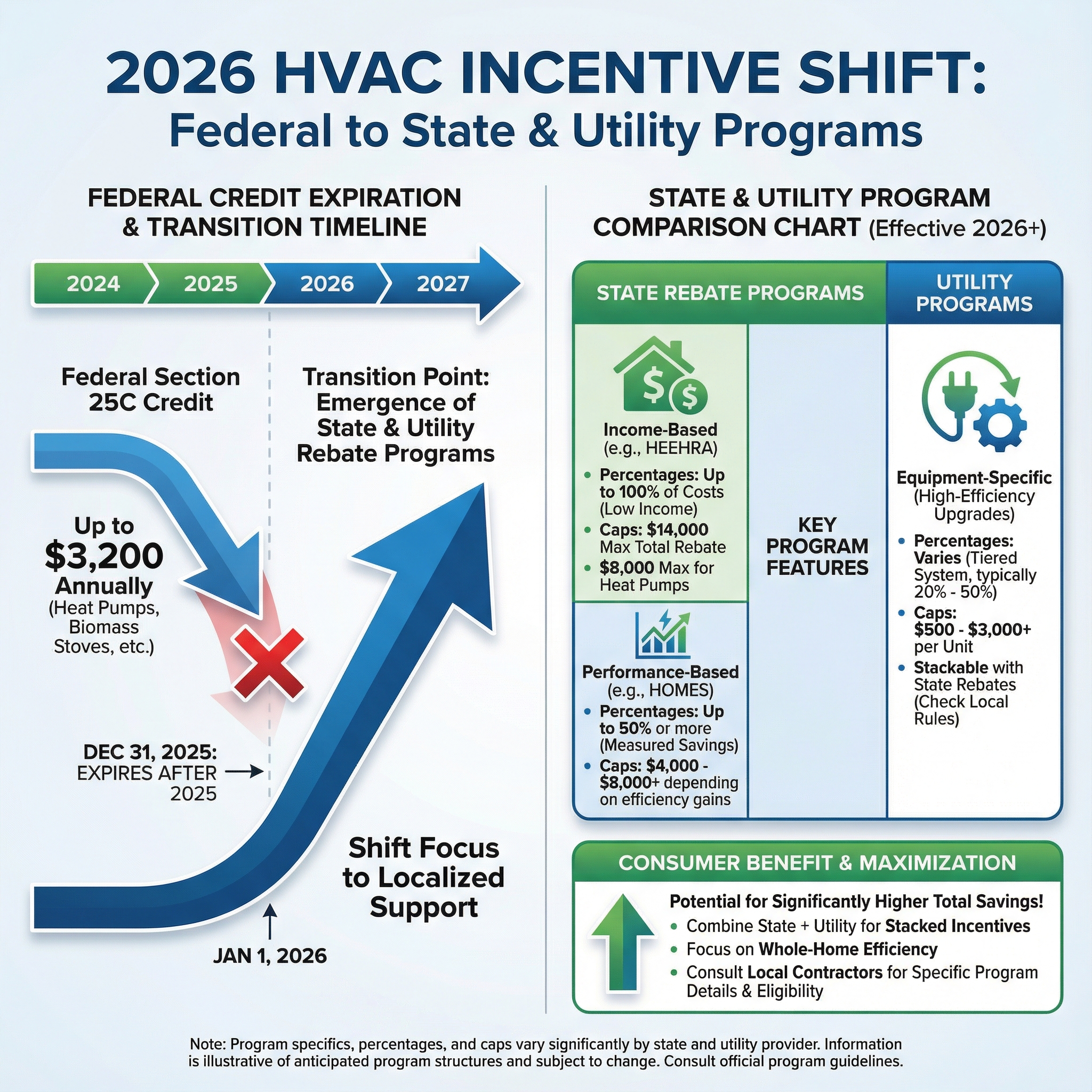
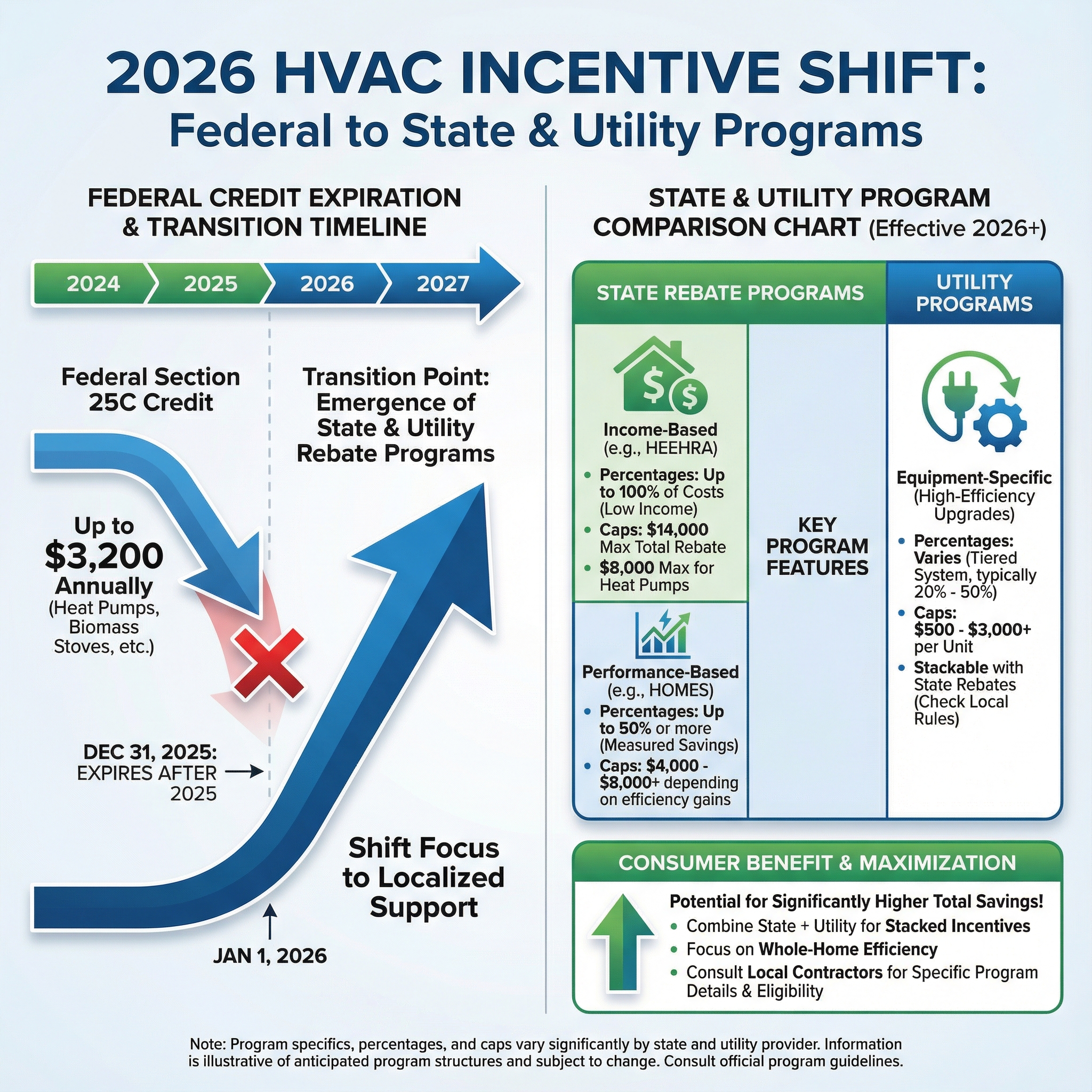
In addition to the federal tax credits, many states and local municipalities offer their own rebate programs to incentivize energy-efficient home improvements. These programs can significantly reduce the upfront cost of upgrading your HVAC system. The key is that these rebates often stack with the federal tax credit, maximizing your overall savings.
The availability and details of these programs vary widely by location. For example, California has a robust set of energy efficiency programs administered by the California Energy Commission (energy.ca.gov). New York offers rebates through NYSERDA (New York State Energy Research and Development Authority). Texas has programs through its State Energy Conservation Office, and Florida offers various incentives through local utility companies.
Finding these programs can take a little research. A good starting point is the DSIRE (Database of State Incentives for Renewables & Efficiency) website (dsireusa.org). This database provides a comprehensive listing of incentives and rebates available in each state. You can also check with your local utility company and state energy office for more information.
It’s important to note that these programs often have specific eligibility requirements and application deadlines. Some programs may prioritize low-income households or offer higher rebates for certain types of equipment. Thoroughly review the program guidelines before applying. Many of these programs require documentation from a licensed HVAC Installation professional.
Because of the localized nature of these rebates, it’s difficult to provide a comprehensive list here. However, I strongly encourage you to explore the resources mentioned above to find the programs available in your area. Don't leave money on the table – these rebates can make a significant difference in the overall cost of your upgrade.
- California: California Energy Commission (energy.ca.gov)
- New York: NYSERDA
- Texas: State Energy Conservation Office
- Florida: Local utility companies
- National Database: DSIRE (dsireusa.org)
State Energy Office Resources
- Alabama - Visit the Alabama Department of Energy Resources for information on potential rebates and programs. https://energy.alabama.gov/
- Alaska - The Alaska Energy Authority provides resources on energy efficiency and potential incentives. https://akenergyauthority.org/
- Arizona - Explore the Arizona Corporation Commission’s energy programs. https://www.azcc.gov/
- Arkansas - Check the Arkansas Energy Office for updates on energy efficiency initiatives. https://www.arkansas.gov/agencies/energy
- California - The California Energy Commission offers a variety of rebates and programs. https://www.energy.ca.gov/
- Colorado - The Colorado Energy Office has information on state and federal energy incentives. https://energyoffice.colorado.gov/
- Connecticut - Visit Energize CT for information on energy efficiency programs. https://energizect.com/
- Delaware - The Delaware Division of Energy provides resources on energy savings and rebates. https://de.gov/energy
Qualifying System Installation: What You Need
Ensuring your HVAC installation qualifies for the tax credits requires careful attention to detail. The IRS requires specific documentation to support your claim. This includes receipts for the equipment and installation costs, as well as product specifications demonstrating that the equipment meets the efficiency requirements.
You’ll also need information about your HVAC contractor, including their name, address, and license number. Working with a licensed and qualified contractor is crucial, not only to ensure a proper installation but also to verify that the equipment meets the necessary standards. A good contractor will be familiar with the tax credit requirements and can help you gather the necessary documentation.
Energy Star certification is a strong indicator of energy efficiency. While not always required, choosing Energy Star certified equipment can simplify the qualification process and provide added assurance that you’re investing in a high-performance system. The Energy Star label is widely recognized and trusted.
Here's a quick checklist to help you stay organized:
Maintaining accurate records throughout the process is essential. Keep all receipts, invoices, and product specifications in a safe place. This documentation will be needed when you file your taxes. Remember, the burden of proof lies with the taxpayer.
- Receipts: For all equipment and installation costs
- Product Specifications: Demonstrating energy efficiency (SEER, AFUE, HSPF)
- Contractor Information: Name, address, license number
- Energy Star Certification: If applicable
- Installation Date: Proof of installation within the qualifying period
Credit Claiming: Filing Your Taxes
To claim the Energy Efficient Home Improvement Credit, you’ll need to complete IRS Form 5695, Residential Energy Credits. This form is used to calculate the amount of the credit you’re eligible to receive. You’ll need to provide detailed information about the qualifying improvements you made, including the costs and efficiency ratings.
The IRS provides detailed instructions for completing Form 5695 on their website (irs.gov). You can also find frequently asked questions and other helpful resources. It's important to read the instructions carefully to ensure you’re claiming the credit correctly.
The credit is generally non-refundable, meaning you can only reduce your tax liability to zero. You won’t receive any of the credit back as a refund if the credit amount exceeds your tax liability. However, some provisions within the Inflation Reduction Act may allow for direct payment in certain circumstances.
Consulting with a tax professional is always a good idea, especially if you have a complex tax situation. They can help you navigate the form and ensure you’re maximizing your tax savings. The IRS website also offers free tax assistance programs for eligible taxpayers. Remember, we provide HVAC services but cannot provide tax advice.
Beyond Rebates: Long-Term Savings
The benefits of investing in energy-efficient HVAC systems extend far beyond the initial tax credit and rebates. These systems are designed to save you money on your energy bills year after year. By reducing your energy consumption, you’ll lower your monthly expenses and reduce your carbon footprint.
The potential savings depend on a variety of factors, including the efficiency of the new system, your climate, and your energy usage habits. However, even a modest upgrade can result in significant savings over the lifespan of the system. For example, upgrading from a 13 SEER air conditioner to a 20 SEER model could save you hundreds of dollars per year.
Energy-efficient HVAC systems can also increase the value of your home. Potential homebuyers are increasingly interested in energy-efficient features, and a high-efficiency HVAC system can be a selling point. It demonstrates that you’ve invested in maintaining and improving your property.
There are many online calculators available to help you estimate your potential energy savings. The ENERGY STAR website (energystar.gov) offers a calculator that allows you to compare the energy costs of different HVAC systems. You can also consult with an HVAC professional to get a personalized estimate based on your specific needs.
Common Questions & Potential Pitfalls
Many homeowners have questions about the HVAC tax credits. One common question is whether the credit applies to rental properties. Generally, the credit is only available for improvements made to your primary residence. Another question is whether you can claim the credit for repairs. The credit only applies to new installations or replacements, not repairs.
A potential pitfall is failing to keep adequate documentation. As mentioned earlier, you’ll need receipts, product specifications, and contractor information to support your claim. Another pitfall is missing application deadlines for state and local rebates. Be sure to check the program guidelines and submit your application on time.
Eligibility requirements can also vary. Some programs may have income limits or other restrictions. It's important to carefully review the program guidelines to ensure you qualify. Finally, be wary of contractors who make unrealistic promises or offer suspiciously low prices. Always get multiple quotes and check references.
- Q: Does the credit apply to rental properties? A: Generally, no.
- Q: Can I claim the credit for repairs? A: No, only for new installations or replacements.
- Q: What documentation do I need? A: Receipts, product specifications, and contractor information.
- Q: Are there income limits? A: Some programs may have income restrictions.
No comments yet. Be the first to share your thoughts!