

Spring HVAC prep
Summer heat is coming, and nobody wants their AC to quit in July. While most people focus on winter prep, a spring check-up keeps the house cool when it actually matters. Getting ahead of the heat saves you from emergency repair bills, which always spike once every technician in town is booked solid.
Waiting until your AC stops working means you're reacting to a problem, not preventing one. A well-maintained system operates much more efficiently, lowering your energy bills. Plus, regular maintenance extends the lifespan of your equipment, protecting your investment. According to ENERGY STAR, consistent maintenance can add years to your HVAC system’s life.
Think of it like your car – you get an oil change and check-up before a long road trip, right? Your HVAC system deserves the same attention. Spring is the perfect time to schedule a tune-up or tackle some DIY maintenance tasks before the summer demand surges and appointment slots fill up. Don't get caught in the heat – prepare now.
Cleaning air conditioner coils
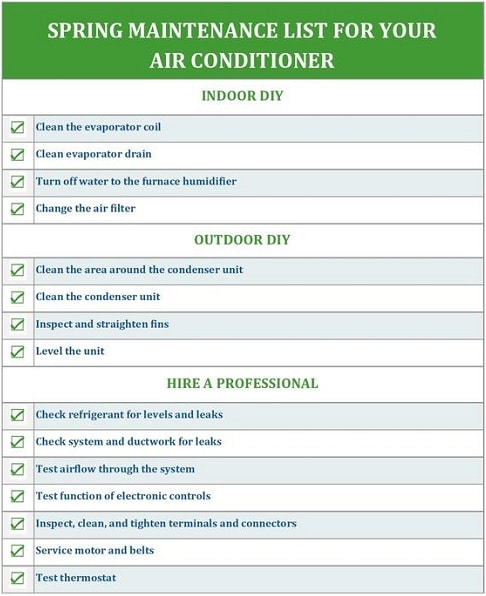
Dirty condenser and evaporator coils are a major cause of AC inefficiency. These coils are responsible for transferring heat, and when they’re covered in dirt, dust, and debris, that heat transfer is significantly reduced. This forces your system to work harder, using more energy and potentially leading to premature failure. It's a surprisingly common problem, and often overlooked.
Cleaning the coils involves several steps. First, and most importantly, turn off the power to the unit at the breaker box. Then, remove any visible debris like leaves, twigs, or grass from around the outdoor condenser unit. For the coils themselves, you can use a soft brush attachment on a vacuum to gently remove loose dirt. A specialized coil cleaner is then applied – look for options designed for AC coils and avoid harsh chemicals that could damage the fins.
After applying the cleaner, rinse the coils thoroughly with water, again being careful not to bend the delicate fins. Bent fins restrict airflow and reduce efficiency. If you’re uncomfortable with any part of this process, or if the coils are severely dirty, it’s best to call a professional. They have the tools and expertise to clean the coils safely and effectively. A professional cleaning can restore efficiency by up to 15%.
Filter changes
We all know we're supposed to change our HVAC filters, but many people don’t understand why or what kind of filter to use. Filters protect your system from dust, pollen, and other airborne particles, but they also affect airflow. A dirty filter restricts airflow, making your system work harder and potentially causing it to overheat. It's a simple maintenance task with a big impact.
Filters are rated using a MERV (Minimum Efficiency Reporting Value) scale. Higher MERV ratings mean the filter captures more particles, improving air quality. However, higher MERV ratings also restrict airflow more. A MERV 8 filter is generally a good balance for most homes, but the ideal rating depends on your system and household needs. Consulting your owner’s manual or a professional is a great idea.
Filter change frequency depends on several factors. Homes with pets, smokers, or allergy sufferers will need to change their filters more often – perhaps every month. Others may be able to get away with changing them every three months. Regularly checking your filter is the best way to determine the right schedule. A clogged filter is a clear sign it’s time for a replacement.
Clearing the drain line
A clogged drain line is a common HVAC problem that can lead to water damage and mold growth. Your air conditioner produces condensation as it cools the air, and that condensation needs to drain away. If the drain line gets clogged with algae, mold, or debris, the water can back up and cause significant problems.
Locating the drain line varies depending on your system, but it’s typically a PVC pipe near the indoor unit. There’s also a drain line for the outdoor condenser unit. You can flush the line with a solution of equal parts vinegar and water. The vinegar helps dissolve the buildup. Alternatively, you can use a commercial drain line cleaner specifically designed for HVAC systems.
Avoid using bleach to clean the drain line, as it can corrode the system’s components. Always wear gloves and eye protection when working with drain line cleaners. If you're uncomfortable performing this task yourself, call a professional. Preventing water damage is far cheaper than repairing it.
Fan & Blower Maintenance: Keep Air Moving
The blower motor and fan blades are crucial for circulating air throughout your home. Dust and debris can accumulate on these components, reducing their efficiency and potentially causing them to overheat. Regular cleaning and maintenance can help prevent these issues. A clean blower motor also contributes to better indoor air quality.
Start by turning off the power to the unit. Then, carefully inspect the blower motor and fan blades for dust buildup. You can use a soft brush or vacuum with a brush attachment to gently remove the debris. Be careful not to damage the blades or motor. It's important to be gentle during this process.
Some older blower motors have oil ports that need a few drops of SAE 20 non-detergent oil every year. Check your manual first. If the motor is sealed or you aren't comfortable opening the cabinet, leave this to a technician during a standard service call to avoid burning out the motor.
What happens during a professional tune-up
While you can handle some HVAC maintenance tasks yourself, a professional spring tune-up goes much further. A qualified technician will perform a comprehensive inspection and maintenance service, including checking refrigerant levels, detecting leaks, inspecting ductwork, and calibrating the thermostat. It's an investment in your system's longevity and efficiency.
A typical tune-up includes checking the refrigerant charge, which is crucial for optimal cooling performance. Low refrigerant levels can reduce efficiency and damage the compressor. Technicians also inspect ductwork for leaks, which can waste energy and reduce comfort. They’ll also calibrate the thermostat to ensure accurate temperature control and evaluate the overall system performance.
A technician has the gauges to check refrigerant levels and the sensors to find small leaks that a visual inspection will miss. They can also verify that the thermostat is actually communicating correctly with the control board, which prevents the system from short-cycling.
Ductwork Inspection: Hidden Efficiency Losses
Leaky or poorly insulated ductwork can account for significant energy losses – up to 30% according to ENERGY STAR. If your ducts are damaged, disconnected, or lack proper insulation, conditioned air can escape into unconditioned spaces, forcing your system to work harder and increasing your energy bills. This hidden inefficiency is a common problem in many homes.
Homeowners can visually inspect ductwork for obvious damage, such as disconnected sections or tears. Also, check the insulation around the ducts. If it’s damaged, missing, or compressed, it’s not providing adequate insulation. Look for dark spots on ducts which could indicate air leaks.
Professional duct sealing and insulation can offer substantial energy savings. Technicians use specialized equipment to locate and seal leaks, and they can add insulation to improve energy efficiency. Resources like those available on ENERGY STAR () provide more information on duct sealing and insulation benefits.
No comments yet. Be the first to share your thoughts!