
Get HVAC maintenance right
Before you open the toolbox or call a technician, you need to establish a clear baseline. Skipping the prerequisites often leads to misdiagnosed issues, wasted trips, or safety hazards. Start by verifying your system's identity. Locate the nameplate on the outdoor condenser or indoor air handler. Note the model number, serial number, and rated capacity (BTU). This data is critical for ordering correct replacement parts, such as capacitors or contactors, and ensures any professional you hire has the exact specifications needed for your unit.
Next, check your thermostat. Is it functioning, or is it a legacy model with dead batteries? A non-responsive thermostat can mimic a compressor failure. Replace batteries, ensure the mode is set correctly, and verify the temperature differential. If your system is older, consider upgrading to a programmable or smart thermostat. This small investment pays off in efficiency and provides diagnostic data that simplifies future maintenance.
Finally, inspect the area around the outdoor unit. Clear away leaves, grass clippings, and debris from at least two feet around the condenser. Poor airflow forces the system to work harder, increasing energy bills and wear on the compressor. A clean perimeter is the first line of defense against costly repairs when the temperature spikes.
Work through the steps
HVAC maintenance should start with a clear boundary: what is actually broken, and what still works normally. Work from low-risk checks to deeper resets. Confirm power state, safe parking, account access, and signal first. Then restart the interface, wait for it to reload completely, and test the original symptom. Avoid changing multiple settings at once because that makes it harder to know which step actually fixed the problem.
If the issue affects safety information, repeats after every restart, or appears with warning messages, treat the reset as a temporary diagnostic step rather than the final fix. Document the symptom and move to official support instead of stacking more DIY attempts.
-
Park and note the symptomPut the system in a safe idle state, then write down whether the HVAC system is frozen, blank, slow, disconnected, or only failing in one app.
-
Try the normal restart firstUse the standard screen or interface restart before changing settings, deleting profiles, or disconnecting accessories.
-
Retest one feature at a timeCheck touch response, audio, navigation, phone pairing, Wi-Fi, and app access separately so the failing path is clear.
-
Escalate repeated failuresContact official support when the screen stays black, warnings appear, or the same issue returns after a clean restart.
Fix common HVAC maintenance mistakes
Even with a checklist, homeowners often skip steps or perform them incorrectly, leading to inefficient cooling and higher repair costs. The following errors are the most frequent causes of preventable system failures.
Ignoring the air filter
The air filter is the first line of defense for your HVAC system. A clogged filter restricts airflow, forcing the blower motor to work harder. This increases energy bills and can cause the evaporator coil to freeze. Check your filter monthly during peak summer. Replace it immediately if it looks gray or dusty. Standard 1-inch filters usually need changing every 30 to 90 days, depending on pets and local dust levels.
Leaving debris around the outdoor unit
The condenser unit outside your home needs space to breathe. If leaves, grass clippings, or shrubs block the coils, heat exchange becomes inefficient. You should keep at least two feet of clear space around the unit. Trim back any vegetation that might grow into the fan or coils. Rinse the exterior fins gently with a garden hose once a season to remove built-up dirt.
Skipping professional annual inspections
DIY maintenance covers the basics, but it misses internal issues. A licensed technician checks refrigerant levels, electrical connections, and motor wear that homeowners cannot safely access. They also clean the condensate drain line to prevent mold and water damage. Skipping this yearly tune-up often leads to costly breakdowns when temperatures peak.
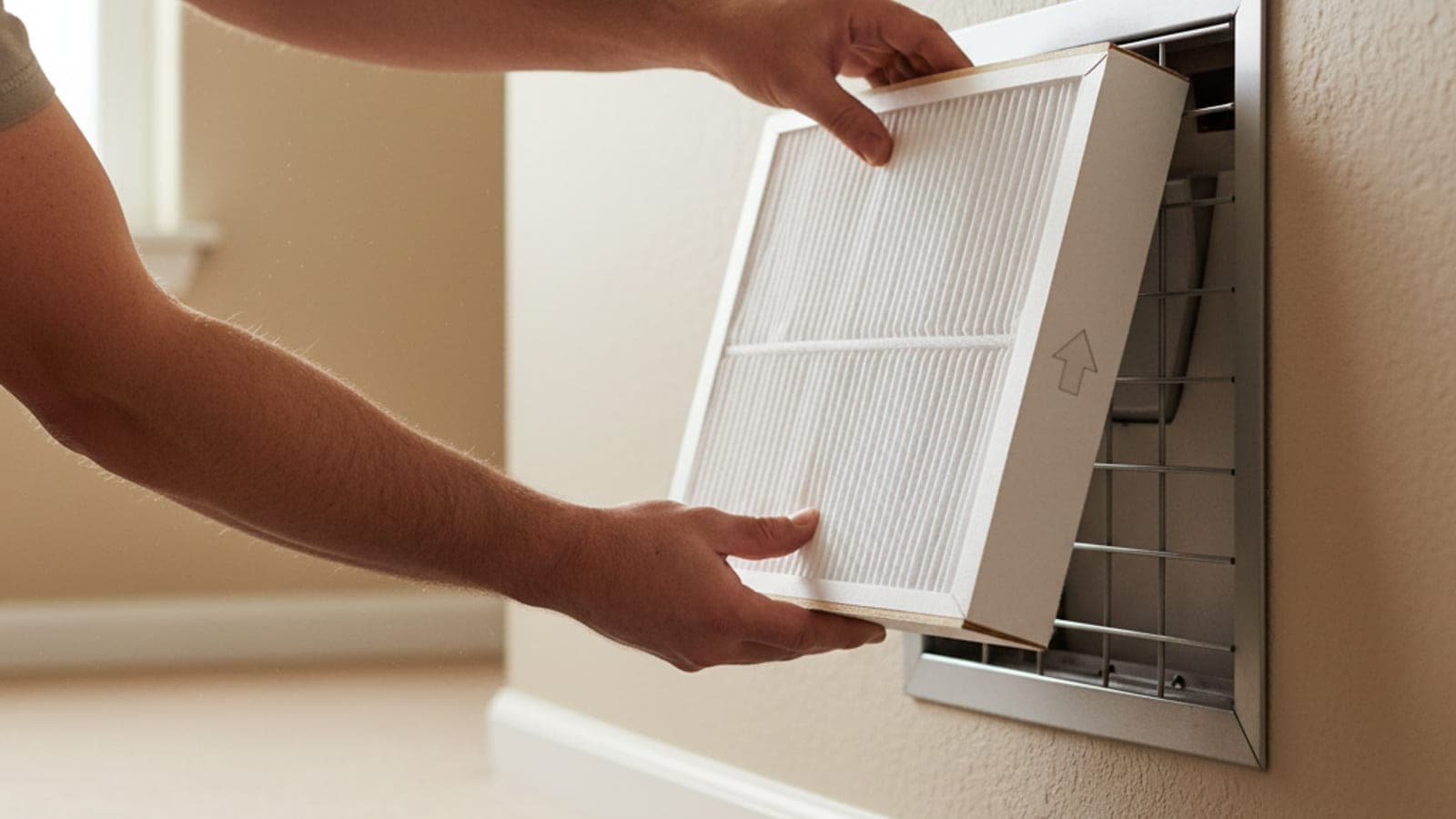
Pull the filter from the return air duct. Hold it up to a light source. If you cannot see light through it, replace it immediately. Note the arrow direction on the frame to install the new one correctly.
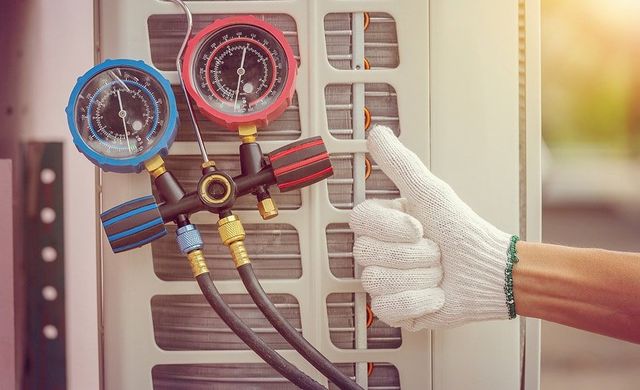
Turn off power to the unit at the breaker. Remove large leaves and grass by hand. Use a hose to spray the fins from the inside out, pushing dirt away from the house rather than deeper into the coil.
Locate the PVC drain line near the indoor air handler. Pour a cup of distilled vinegar through the access tee to kill algae and prevent clogs. Ensure water flows freely into the drain line outside.
Letting the thermostat settings drift
Many homeowners set their thermostats too low, assuming it will cool the house faster. It does not. The system runs at full capacity until it reaches the set temperature, regardless of how low you set it. This wastes energy and strains the compressor. Program your thermostat to raise the temperature by 7–10°F when you are away. This simple habit can lower cooling costs by up to 10% annually.
Neglecting the condensate drain line
A clogged drain line is a leading cause of water damage in homes with central AC. Algae and mold build up over time, blocking the pipe. If the line backs up, the system’s safety switch will shut off the compressor to prevent overflow. Pouring a cup of vinegar or bleach into the drain access point every few months keeps the line clear and the system running safely.
Hvac maintenance: what to check next
These answers address the most common practical objections homeowners face when planning their seasonal tune-ups. The goal is to clarify what the work involves, when repairs turn into replacements, and why the routine effort pays off.
No comments yet. Be the first to share your thoughts!