

Narrow down the problem
HVAC maintenance issues are easier to solve when you separate the symptom from the device itself. A frozen touchscreen, a blank display, broken Bluetooth, and a slow map update can feel like the same failure, but they point to different causes. Write down what still works, what stopped responding, and whether the problem appears after startup, after a software update, or only after pairing a phone.
Do the first pass while the car or device is parked, powered normally, and connected to a stable signal. If only one app is frozen, close that path before treating the whole system as broken. If core controls, driver information, warning lights, or safety features are involved, stop treating it as a cosmetic infotainment issue and move to the official support path.
This distinction keeps the reset from becoming a ritual. The goal is not to reboot repeatedly; it is to prove whether the fault is temporary software lag, a connection problem, outdated firmware, accessory interference, or something that needs service documentation.
The simplest way to use this section is to keep the setup small, verify each change, and record the stable configuration before adding optional accessories.
-
Park and note the symptomPut the system in a safe idle state, then write down whether the HVAC system is frozen, blank, slow, disconnected, or only failing in one app.
-
Try the normal restart firstUse the standard screen or interface restart before changing settings, deleting profiles, or disconnecting accessories.
-
Retest one feature at a timeCheck touch response, audio, navigation, phone pairing, Wi-Fi, and app access separately so the failing path is clear.
-
Escalate repeated failuresContact official support when the screen stays black, warnings appear, or the same issue returns after a clean restart.
What usually fixes it
When your AC struggles to cool or makes strange noises, the fix often depends on a simple diagnostic step: is the issue mechanical, electrical, or just dirty? Most repair bills stem from neglected basics rather than catastrophic failures. By addressing these common culprits first, you can often avoid a service call entirely.
Clogged or dirty air filters
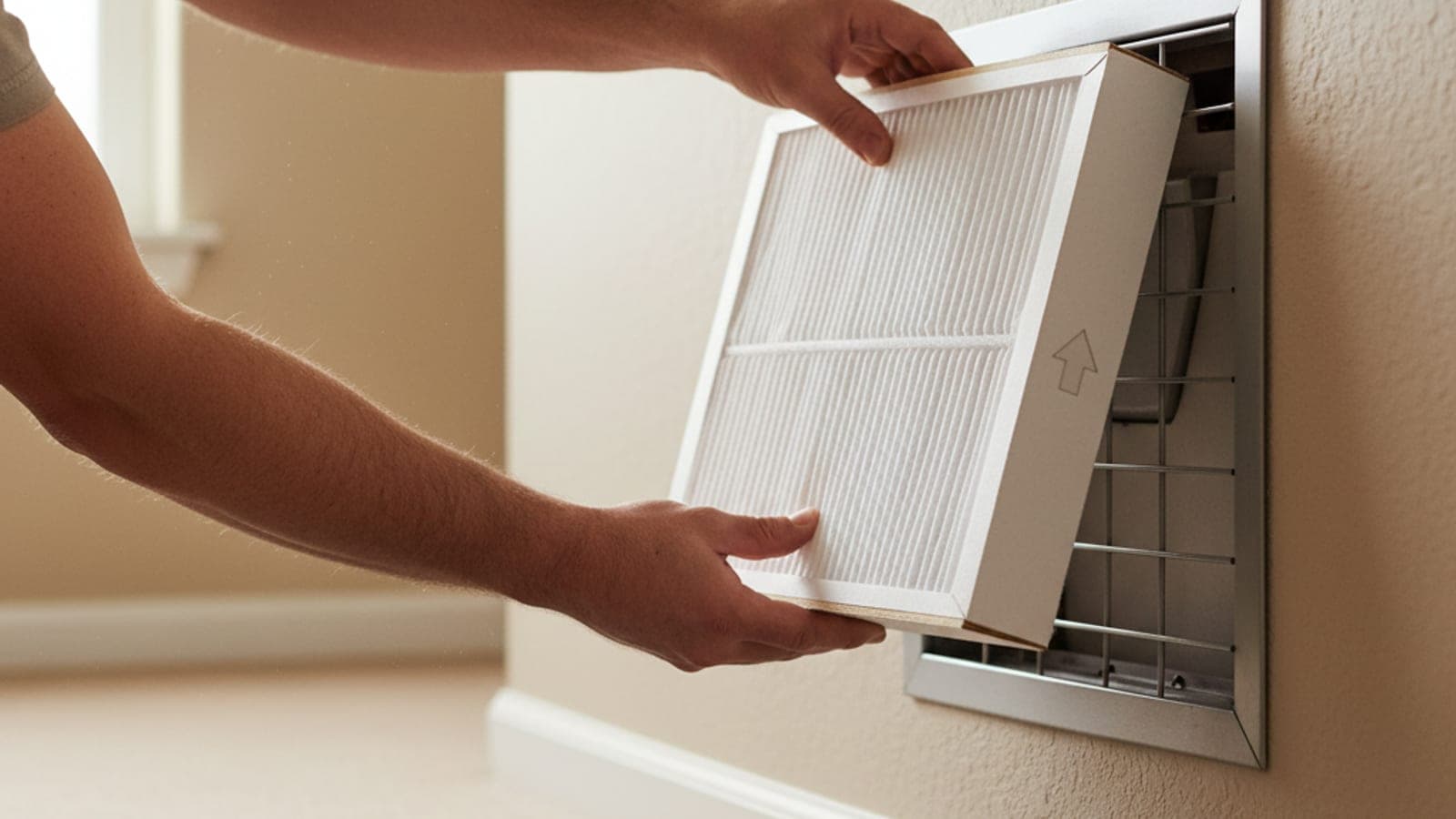
The most frequent cause of reduced airflow and frozen coils is a clogged filter. When air can’t pass through, the evaporator coil drops below freezing, turning moisture into ice that blocks airflow completely. Replacing a standard 1-inch filter every 30–90 days is the single most effective maintenance task you can perform. For thicker 4–5 inch media filters, check them every six months. If the filter is black with dust, replace it immediately; if it’s just gray, vacuuming it might buy you another month, but replacement is safer for system longevity.
Dirty evaporator and condenser coils
Over time, dust and debris build up on both the indoor evaporator coil and the outdoor condenser coil. This insulation layer forces the compressor to work harder, raising energy bills and shortening the unit’s life. You can clean the outdoor condenser coil with a garden hose (turn off power first) and straighten any bent fins with a fin comb. The indoor coil is harder to access; if it’s heavily soiled, a professional coil cleaning service is usually worth the cost to restore efficiency.
Refrigerant leaks
If your AC blows warm air despite clean filters and coils, you may have a refrigerant leak. Unlike oil, refrigerant doesn’t “burn off”; it escapes through pinhole leaks in copper lines. This is not a DIY fix. Low refrigerant damages the compressor, which is the most expensive part of the system. A licensed technician must locate the leak using electronic detectors or dye, repair it, and then recharge the system to the manufacturer’s exact specification. Never just add refrigerant without fixing the leak.
Tripped circuit breakers or blown fuses
Sometimes the problem is simply electrical. If the outdoor unit is silent, check your main electrical panel. A tripped breaker can be reset by flipping it fully off and then back on. If it trips again immediately, do not reset it again; this indicates a serious short or motor failure. Similarly, check the disconnect switch near the outdoor unit to ensure the safety switch isn’t tripped. If the breaker holds but the unit still won’t start, the issue likely lies in the contactor or capacitor, which requires professional testing.
Clogged condensate drain lines
A clogged drain line can cause water damage and trigger a safety switch that shuts off the AC. During humid months, algae and mold can grow inside the PVC drain line, blocking water flow. To clear it, locate the T-shaped PVC pipe near the indoor air handler. Pour a cup of distilled white vinegar or a specialized condensate pan tablet into the access port to kill algae. For a stubborn clog, use a wet/dry vacuum on the outlet end to suck out the blockage. If water leaks from the indoor unit, the primary drain is likely fully blocked.
Faulty capacitors
The run capacitor provides the jolt needed to start the compressor and fan motors. When it fails, the outdoor unit might hum but not start, or the fan might spin slowly. This is a common failure point, especially in older units. A technician can test it with a multimeter. Replacing a capacitor is relatively inexpensive, but it requires handling electrical components, so leave this to professionals unless you have experience with HVAC electrical repair.
Hvac maintenance: what to check next
Homeowners often hesitate to schedule a tune-up because the process feels vague or the costs seem high. The following answers clarify exactly what technicians check, how to decide between repair and replacement, and what you can handle yourself.
What is HVAC maintenance?
HVAC maintenance is a scheduled inspection and cleaning of your heating and cooling systems. A technician checks refrigerant levels, cleans coils, inspects electrical connections, and tests safety controls. This routine care prevents unexpected breakdowns during extreme weather and keeps energy bills from spiking.
What maintenance needs to be done on HVAC?
A professional tune-up includes inspecting the condensate drain to prevent leaks, checking thermostat calibration, and tightening electrical connections. They also measure airflow and clean the evaporator and condenser coils. Homeowners should handle one critical task monthly: replacing the air filter. A clogged filter restricts airflow, forcing the system to work harder and raising utility costs.
What is the $5000 rule for HVAC?
The $5,000 rule helps decide if you should repair or replace an aging unit. Multiply the age of your system by the cost of the repair. If the result exceeds $5,000, replacement is usually the smarter financial move. For example, repairing a 10-year-old furnace for $600 yields a score of 6,000, suggesting you should buy a new unit instead.
What is needed for HVAC maintenance?
You need a reliable air filter that matches your system’s MERV rating and dimensions. Basic tools for DIY tasks include a screwdriver, a vacuum with a brush attachment, and a garden hose for rinsing outdoor condenser fins. For the full inspection, hire a licensed technician who has specialized gauges and multimeters to safely test electrical components and refrigerant pressure.

No comments yet. Be the first to share your thoughts!