

HVAC careers: High demand and earning potential
Skilled HVAC technicians are in high demand, with earning potential often exceeding $75,000 annually. This figure is projected to climb due to a significant labor shortage. While apprenticeship.gov reported a median annual wage of $51,390 for HVAC Mechanics and Installers in May 2023, this figure doesn't account for top earners or those in high-cost-of-living areas.
Several factors are converging to create this robust job market. Aging HVAC systems in homes and businesses require constant maintenance and eventual replacement, while new construction projects continue to add to the demand. The push for energy efficiency and the adoption of green technologies – like heat pumps – are also driving the need for qualified technicians. Philadelphia Technician Training (ptt.edu) highlights HVAC as one of ten high-demand skilled trades, alongside welding and automotive repair.
The HVAC field offers various specializations, including installation, maintenance, and repair. Further specialized areas like commercial refrigeration or building automation also exist. This diversity of roles makes it an appealing career path.
The HVAC industry is evolving beyond simple repairs, focusing on new technologies, energy efficiency, and maintaining comfortable indoor environments. Continuous learning is essential for advancement and higher earning potential, making it a strong career choice.
Apprenticeship vs. trade school for HVAC training
So, how do you become an HVAC technician? There are generally two main paths: registered apprenticeship programs and trade schools. Both lead to a career, but they differ significantly in structure and cost. A registered apprenticeship is essentially an 'earn while you learn' program. You work for an employer, receiving on-the-job training under the guidance of experienced professionals, and simultaneously complete related classroom instruction.
Apprenticeships are structured by the Department of Labor and are designed to provide a comprehensive understanding of the trade. The benefit is that you’re earning a paycheck from day one, avoiding the debt associated with tuition. However, apprenticeships can be competitive to get into, and the training period is typically longer – often four to five years. You’re committing to an employer for that duration, which isn’t for everyone.
Trade schools, on the other hand, offer a more condensed learning experience. You’ll spend several months to a year in a classroom and lab setting, gaining a foundational knowledge of HVAC principles. This can be a faster route to entering the workforce, but it comes with a significant upfront cost. Tuition can range from $5,000 to $20,000 or more, depending on the school and program length.
I've spoken with technicians who went both routes, and the experience varies. Trade school grads sometimes struggle to find employment initially, lacking the extensive practical experience employers value. Apprenticeships aren’t a guaranteed job either, and require a strong work ethic and willingness to learn. Finding registered apprenticeships is streamlined through apprenticeship.gov; it’s a great place to start your search. It’s worth carefully weighing the pros and cons of each path based on your individual circumstances and financial situation.
One thing I've noticed is that employers often prefer candidates with completed apprenticeships, even if it took longer to complete. That hands-on experience is hard to replicate in a classroom.
HVAC Training Pathways: Apprenticeship vs. Trade School
| Criteria | Apprenticeship | Trade School |
|---|---|---|
| Cost | Typically free; apprentices earn while they learn. | Can range significantly, from a few thousand to tens of thousands of dollars depending on the program and location. |
| Time to Completion | Generally 2-5 years, combining on-the-job training with related classroom instruction. | Typically 6 months to 2 years, focused primarily on classroom and lab work. |
| Earning Potential During Training | Apprentices receive progressively increasing wages as their skills develop, often starting as a percentage of a journeyman’s wage. | Students generally do not earn income during training, and may incur debt to cover tuition and living expenses. |
| Hands-on Experience | Extensive; the majority of training is practical, on-the-job experience under the guidance of experienced professionals. | Varies; some programs offer significant lab time, but it is generally less extensive than the hands-on experience gained through an apprenticeship. |
| Job Placement Assistance | Often strong, as apprenticeships are frequently sponsored by employers who intend to hire graduates. | Varies widely by school; some offer robust career services, while others provide limited support. |
| Licensing Requirements | Completion of a registered apprenticeship program often fulfills a significant portion of the requirements for professional licensure. | Trade school completion may require additional steps to meet licensing requirements, such as passing an exam or accruing additional work experience. |
| Curriculum Focus | Combines practical skills with theoretical knowledge directly applicable to real-world job tasks. | May offer a broader theoretical foundation, but may require further training to develop specific job skills. |
Illustrative comparison based on the article research brief. Verify current pricing, limits, and product details in the official docs before relying on it.
HVAC apprenticeship requirements
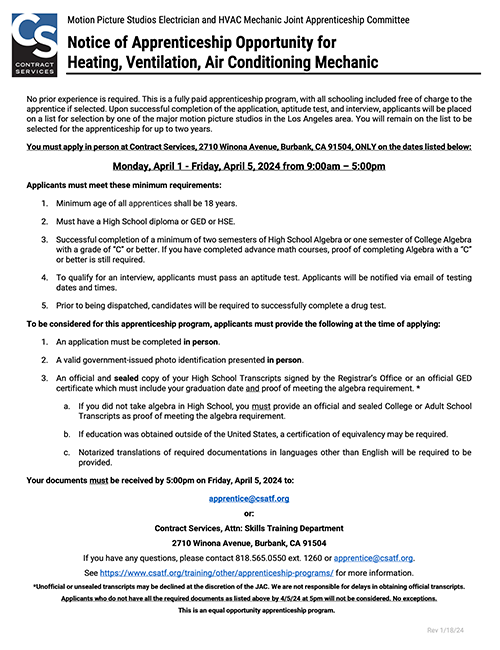
Okay, you're interested in an apprenticeship – what does it actually take to get one? The requirements can vary depending on the employer and the specific program, but there are some common threads. A high school diploma or GED is almost always required. Some programs may also prefer or require completion of specific courses, such as algebra, physics, or shop classes.
Employers are looking for more than just a piece of paper, though. Mechanical aptitude is key – a natural ability to understand how things work. Problem-solving skills are essential for diagnosing and repairing HVAC systems. Physical stamina is also important, as the job can involve lifting heavy equipment and working in awkward positions. And attention to detail is crucial for ensuring accurate installations and repairs.
The application process typically involves submitting a resume, completing an interview, and potentially taking an aptitude test. Be prepared to discuss your skills and experience, and to demonstrate your enthusiasm for the trade. Soft skills – communication, teamwork, and customer service – are also highly valued. Being able to explain technical issues to clients clearly and professionally is a huge plus.
I’m not entirely sure about the prevalence of drug testing across all HVAC apprenticeships, but it’s becoming increasingly common, particularly with larger companies. It’s best to assume it will be part of the process and be prepared accordingly. Honesty and a willingness to learn are your best assets throughout the application process.
Don’t underestimate the importance of presenting yourself well. A clean appearance and professional demeanor can make a lasting impression.
- High school diploma or GED is almost always required. Some programs may also prefer or require completion of specific courses, such as algebra, physics, or shop classes.
- Mechanical aptitude, or a natural ability to understand how things work, is sought after.
- Problem-solving skills are essential for diagnosing and repairing HVAC systems.
- Physical stamina is important, as the job can involve lifting heavy equipment and working in awkward positions.
- Attention to detail is crucial for ensuring accurate installations and repairs.
- A strong work ethic is valued.
- Good communication skills, including the ability to explain technical issues clearly and professionally to clients, are highly valued.
Leading states for HVAC technicians
Anticipating top states for HVAC technicians in 2026 involves examining job growth projections, average salaries, and market competition. States with rapid population growth and significant construction activity are likely to experience the highest demand. Data from the Bureau of Labor Statistics suggests Texas, Florida, and Arizona are positioned for substantial growth in HVAC employment.
Texas, for example, is experiencing a boom in both residential and commercial construction, driving demand for HVAC services. The Dallas-Fort Worth-Arlington metropolitan area is particularly hot, with a large number of job openings and competitive salaries. Florida's warm climate and growing population contribute to a constant need for cooling systems, making it another prime location for HVAC technicians.
Arizona, with its expanding cities like Phoenix and Tucson, is also experiencing strong demand. However, it's important to consider the competition in these areas. A high demand can also mean a larger pool of applicants. States in the Southeast, like North Carolina and South Carolina, are also showing promising growth, offering potentially less competition than the Sun Belt states.
Considering the cost of living is important; a high salary in one state may have less purchasing power than a lower salary in a more affordable area. Researching specific metropolitan areas, local job boards, and connecting with HVAC companies provides insight into current market conditions. States like Colorado, with a growing tech sector and focus on sustainability, may also present opportunities.
States promoting green energy initiatives, leading to increased heat pump installations, will likely see higher demand for technicians skilled in these technologies.
HVAC specializations and earning potential
The HVAC field offers opportunities to specialize, which can lead to higher earning potential and more challenging work. One common distinction is between residential and commercial HVAC. Residential technicians work on homes, while commercial technicians focus on larger buildings, such as offices, hospitals, and schools. Commercial systems are often more complex and require a different skillset.
Refrigeration is another specialization, involving the design, installation, and maintenance of refrigeration systems used in grocery stores, restaurants, and industrial facilities. Building automation systems are becoming increasingly popular, allowing for centralized control of HVAC, lighting, and security systems. Technicians specializing in this area need strong computer skills and a good understanding of control systems.
Ductwork installation and repair is a crucial aspect of HVAC, often overlooked. Properly designed and installed ductwork is essential for efficient airflow and optimal system performance. Green HVAC technologies, such as heat pumps and solar thermal systems, are also a growing field. These systems offer energy savings and environmental benefits, but require specialized knowledge and training.
I've seen technicians who specialize in geothermal systems earning significantly more than those focused solely on traditional air conditioning. Specializing allows you to become an expert in a particular area, making you more valuable to employers. It also provides opportunities for continuous learning and professional development.
The earning potential varies significantly based on specialization and location. But generally, the more specialized your skills, the higher your earning potential will be.
- Residential HVAC technicians work on homes.
- Commercial HVAC technicians focus on larger buildings, such as offices, hospitals, and schools, which often have more complex systems.
- Refrigeration specialization involves the design, installation, and maintenance of systems used in grocery stores, restaurants, and industrial facilities.
- Building automation systems require technicians with strong computer skills and an understanding of control systems for centralized management of HVAC, lighting, and security.
- Ductwork installation and repair is a crucial aspect for efficient airflow and optimal system performance.
- Green HVAC technologies, such as heat pumps and solar thermal systems, offer energy savings and environmental benefits but require specialized knowledge.
HVAC Specializations
- Residential HVAC Technician - Focuses on the installation, maintenance, and repair of heating, ventilation, and air conditioning systems in homes. This is often an entry point into the field. Average salary range: $48,000 - $78,000.
- Commercial HVAC Technician - Deals with larger, more complex HVAC systems found in businesses, industrial buildings, and other commercial properties. Requires a broader understanding of controls and systems. Average salary range: $55,000 - $95,000.
- HVAC/R Technician (Refrigeration) - Specializes in the unique systems used for refrigeration, including grocery store freezers, industrial coolers, and refrigerated transport. Often involves working with specialized refrigerants. Average salary range: $50,000 - $85,000.
- Sheet Metal Worker (HVAC focus) - Fabricates and installs ductwork, air distribution systems, and other sheet metal components crucial to HVAC systems. Requires skills in welding, cutting, and joining metal. Average salary range: $45,000 - $75,000.
- Building Automation Systems (BAS) Technician - Focuses on the control systems that manage HVAC and other building functions. Requires knowledge of programming, networking, and control theory. Average salary range: $60,000 - $100,000.
- HVAC Controls Technician - Installs, maintains, and repairs the electronic controls that regulate HVAC systems. This includes thermostats, sensors, and automated control systems. Average salary range: $52,000 - $88,000.
- Green HVAC Technician - Specializes in energy-efficient HVAC technologies, including geothermal systems, solar heating, and high-efficiency equipment. Focuses on sustainable solutions. Average salary range: $50,000 - $80,000.
Future skills for HVAC technicians
The HVAC industry is rapidly evolving, and technicians will need to master new skills to stay ahead of the curve. Smart home technology is becoming increasingly integrated with HVAC systems, allowing homeowners to control temperature, lighting, and other functions remotely. Technicians will need to be proficient in installing, configuring, and troubleshooting these systems.
Energy efficiency is another key area. Building owners are demanding more efficient systems to reduce energy costs and minimize their environmental impact. Technicians will need to understand energy codes and be able to recommend and install energy-saving technologies. Sustainable HVAC systems, such as heat pumps and solar thermal, will also continue to gain popularity.
Proficiency in computer diagnostics and data analysis will be essential. Modern HVAC systems are equipped with sophisticated sensors and controls that generate vast amounts of data. Technicians will need to be able to interpret this data to diagnose problems and optimize system performance. Building information modeling (BIM) is also becoming more common, allowing for the creation of virtual models of buildings and their HVAC systems.
I think understanding controls systems will be huge. As systems become more complex, the ability to program and troubleshoot these controls will be in high demand. Technicians who can bridge the gap between mechanical and digital systems will be particularly valuable. Continuous learning will be crucial for success in this rapidly changing field.
Staying up-to-date on the latest technologies and industry trends is essential. This can involve taking continuing education courses, attending trade shows, and participating in online forums.




No comments yet. Be the first to share your thoughts!